

When most people think of Art Nouveau, images of flowing ironwork, swirling floral motifs, and stained glass masterpieces come to mind. What is less known is how this early 20th-century art movement found expression in garden design.
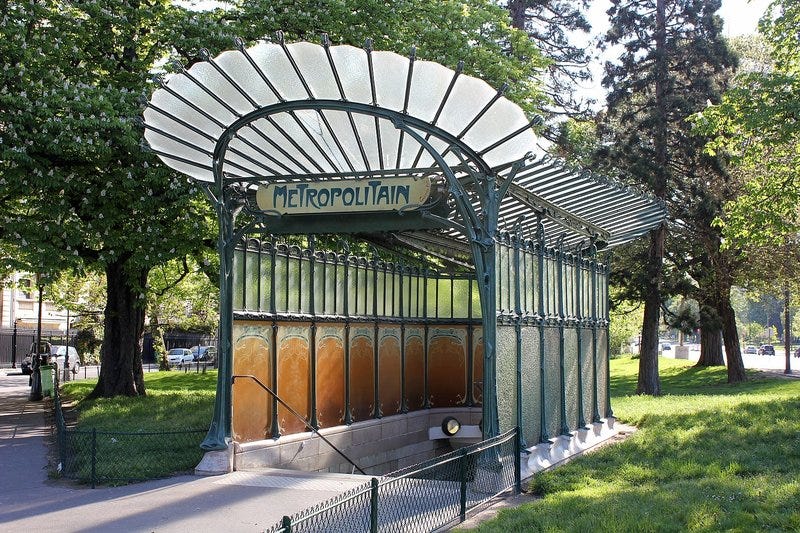
What Is Art Nouveau?
Art Nouveau, which means “new art” in French, emerged as an artistic movement in the 1890s and lasted until around 1910. It was a reaction against the historicism and rigid academic styles of the 19th century. Inspired by natural forms, especially flowers and plants, it sought to create a new aesthetic that was elegant, decorative, and unbound by tradition.
Although it spanned multiple disciplines, including architecture, furniture, textiles, glassware, and graphic design, Art Nouveau shared a common visual language: asymmetry, curvilinear lines, whiplash curves, and stylized botanical motifs.
The Origins of Art Nouveau in Garden Design
Art Nouveau garden design did not develop as a formal movement with clear rules, unlike its contemporaries such as Arts and Crafts. Instead, it evolved as an offshoot of architectural and artistic experimentation. In many ways, gardens became extensions of Art Nouveau buildings. The same design principles used in facades, staircases, and decorative panels were applied to fences, trellises, gates, and garden paths.
The style found its greatest expression in urban homes and villas, especially in cities like Paris, Brussels, Vienna, and Barcelona. Garden elements were often custom-designed by the architects themselves or created in collaboration with artists and craftsmen who specialized in ironwork, stone carving, or ceramics.
Core Features of Art Nouveau Garden Design
While there's no strict formula, several characteristics define Art Nouveau gardens:
1. Curving, Organic Layouts
Forget straight lines and formal symmetry. Art Nouveau gardens emphasize curves that mimic natural forms—vines, waves, tendrils. Paths meander gently, flower beds swirl in asymmetrical patterns, and even built structures like pergolas or arbors bend and twist in plant-like forms.
2. Decorative Ironwork and Sculpture
Perhaps the most iconic feature of an Art Nouveau garden is its ornamental detailing. Gates, fences, benches, and trellises are adorned with intricate wrought iron, often shaped into stylized leaves, flowers, or insects. These features are not just functional; they’re works of art.
Statuary and fountains, too, often reflect the aesthetic. Female figures with flowing hair, animals like dragonflies or swans, and abstract motifs rooted in nature populate these spaces.
3. Botanical Inspiration in Hardscaping
Even masonry and tiling reflect botanical themes. You might find stepping stones shaped like lily pads, ceramic tiles decorated with iris patterns, or garden walls lined with mosaics resembling vines or roots. The garden becomes a tapestry of textures and materials that echo the natural world.
4. Planting Style: Dramatic and Sculptural
Unlike the painterly and seasonal emphasis of Arts and Crafts gardens, Art Nouveau planting is more concerned with form and contrast. Plants with dramatic silhouettes, large leaves, or unusual structures are favored.
Popular choices include:
Ferns and palms
Irises and lilies (especially calla and water lilies)
Hostas and ornamental grasses
Rambling roses and flowering vines
Exotic-looking perennials and architectural plants like Gunnera
Color is used selectively, often to highlight form rather than for its own sake.
5. Integration with Architecture
This is perhaps the most defining principle of Art Nouveau in any context: unity. The garden doesn’t stand apart from the house—it flows from it. Materials used in the building appear in garden features. Doors align with paths. Stained glass windows cast colored light onto planted beds. The effect is immersive and theatrical.
Famous Art Nouveau Gardens and Landscapes
While Art Nouveau gardens are not as common as other historical styles, a few outstanding examples showcase the movement’s full potential:
Park Güell, Barcelona
Perhaps the most famous Art Nouveau garden in the world, Park Güell was designed by Antoni Gaudí and opened in 1926. Originally intended as a residential development, it became a public park that embodies all the whimsy and surrealism of Gaudí’s vision. While listed here as an example of Art Nouveau, it is worth noting that Gaudi’s work is in the style of the Modernisme movement, also known as Catalan Art Nouveau.
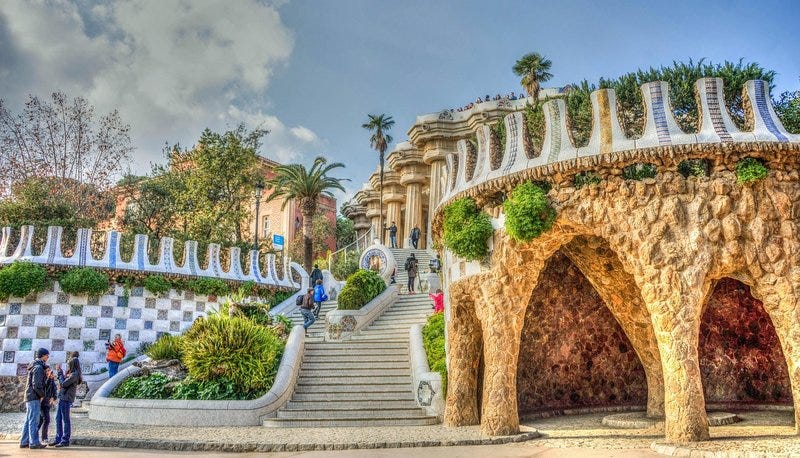
Curved benches covered in mosaic tile snake through the landscape. Stone walkways resemble natural caves or root systems. Every inch of the park is decorated with natural forms—from lizard sculptures to abstract palm-tree columns.
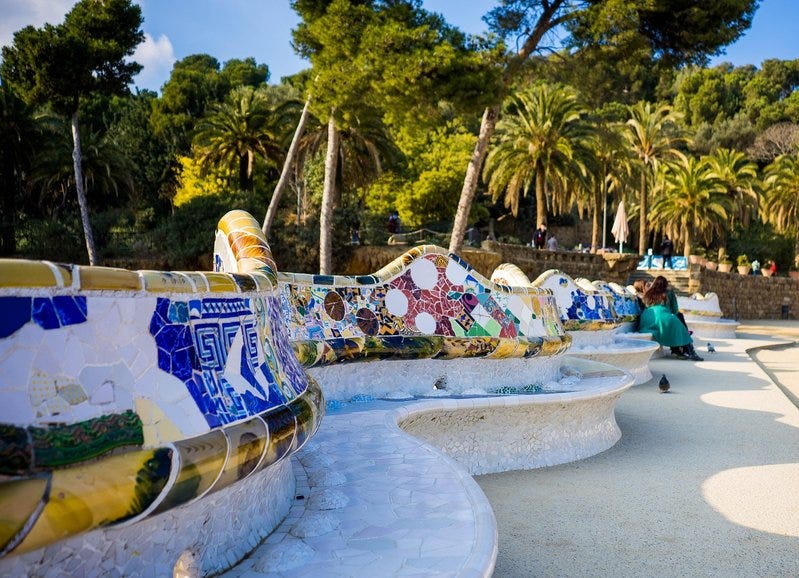
Birmingham Botanic Garden (UK)
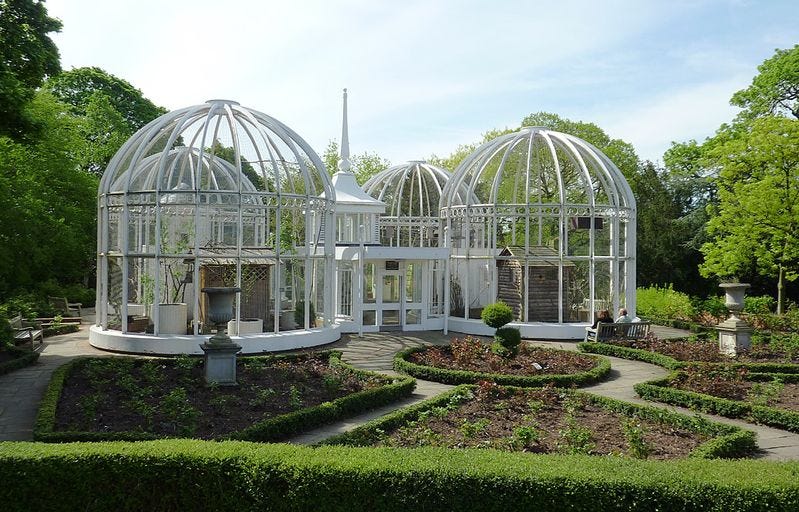
The Botanic Gardens in Birmingham incorporate Art Nouveau features into their landscape. Features include ornate ironwork gazebos, elegantly curved pathways and intricately designed conservatories and aviaries.
How Art Nouveau Gardens Differ from Arts and Crafts Gardens
It’s easy to confuse the two styles at first, as both draw from nature and emerged in response to industrialization, but their approaches are very different:
Where Arts and Crafts is grounded and tactile, Art Nouveau is more ethereal and ornamental. Arts and Crafts seeks harmony with nature; Art Nouveau stylizes and reinterprets it.
How to Bring Art Nouveau Style into Your Garden
Even if you’re not restoring a historic villa, you can incorporate Art Nouveau touches into a modern garden:
Use curved lines in paths and borders.
Add decorative ironwork, such as gates, railings, or trellises.
Choose plants with strong forms—giant hostas, feathery ferns, or flowering vines.
Incorporate mosaics or tiles into walls or paving.
Include sculpture—even a simple fountain with stylized lines can evoke the era.
The key is restraint and elegance. Art Nouveau gardens are not overgrown or wild—they are curated, flowing, and artistic.
Why Art Nouveau Gardens Still Inspire Today
In a world of rigid grids and minimalist landscapes, Art Nouveau gardens offer something truly different: a celebration of natural beauty filtered through the imagination. They remind us that gardens can be more than functional or aesthetic—they can be poetic, even fantastical.
Whether you’re wandering through Gaudí’s surreal landscapes or adding a sinuous trellis to your own backyard, the Art Nouveau garden invites you to see nature not just as it is, but as it could be in a dream.