


Anyone familiar with my work knows that I like to use rocks in my landscape designs. Rocks can really help anchor a design and provide some assistance to new plants.

Mostly, I use rocks sparingly to create focal points, but sometimes I use them to create entire structures within the garden.
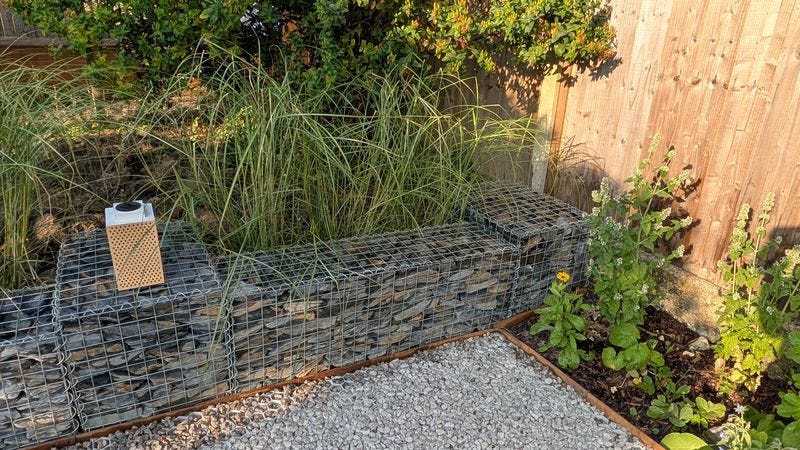
Many modern gardens feature heavy steel wire baskets filled with rock. These are called gabions and are the topic of today’s post. Gabions are versatile design features that can provide aesthetic and structural benefits.
The Origins: From Nile Banks to Renaissance Genius
The word gabion originates from the Italian gabbione, which literally translates to “big cage”. Long before they became popular for landscaping, these large cages were used in many ways throughout history.
Ancient Egypt (~7,000 Years Ago): The earliest recorded gabions were used along the Nile River. Farmers and builders filled woven reed and wicker baskets with soil and silt to reinforce riverbanks against seasonal flooding and erosion.
Battlefield Shields: In medieval and early modern warfare, military engineers used bottomless wicker gabions stuffed with earth. Sappers and gun crews carried them empty and, on the fly, packed them with local soil to build instant defensive fortifications.
Leonardo da Vinci: Renaissance genius Leonardo da Vinci designed a specialised wicker gabion, known as the Corbeille Léonard. This gabion was used to reinforce the foundations of the Castello Sforzesco in Milan during the late 15th century.
The Maccaferri Gabion: The box-shaped wire baskets we are familiar with today were pioneered and patented by the Italian company Maccaferri in the early 20th century. Before their invention, gabion baskets were made from organic materials.
4 Ways to Use Gabions in Your Landscape Plans
Gabions are remarkably adaptable landscape elements. Because they require no concrete mortar, they are self-draining, flexible, and built to last. Today, gabion baskets are available at many garden centres and trade suppliers, making them a landscape element that a competent, strong DIY landscaper can install.
1. Furniture Bases (Benches & Tables)
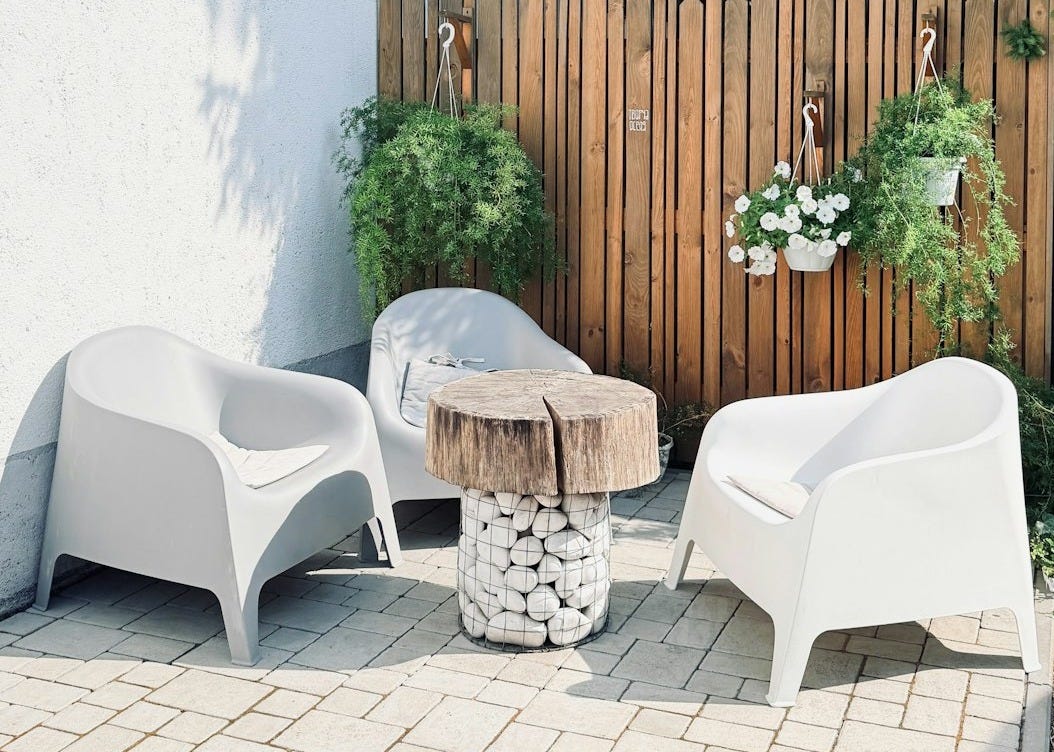
Using narrow wire baskets as the sub-base for benches and dining tables is one of the most effective ways to introduce stone texture into a patio or dining area.
Fill a narrow basket with decorative stone and anchor a hardwood or composite timber capping on top to serve as the seat or tabletop. If you don’t want a boxy look, gabion baskets can be sourced in cylindrical shapes, as seen in the photo below.
Unlike lightweight wooden legs that can rot over time in contact with damp ground, stone-filled bases are virtually indestructible and won’t tip over in high winds. The only downside is that once filled with rocks, they can be difficult to move into a different position. Make sure you are happy with their placement before you start filling the basket with rocks.
2. Retaining Walls
Holding back sloping ground usually requires heavy concrete footings and weep holes to prevent water pressure build-up.

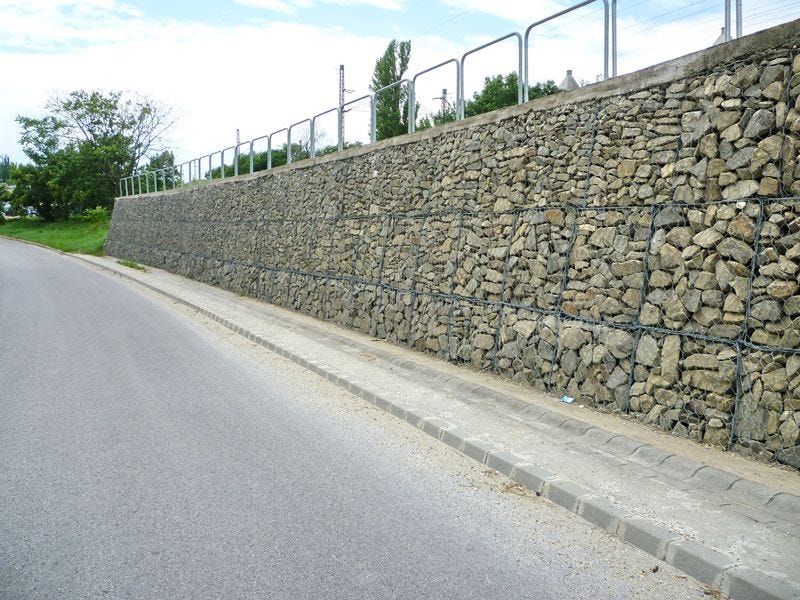
Gabions have a big advantage over solid retaining walls due to the air gaps between the rocks. Water freely drains straight through the open stone infill, eliminating the hydrostatic pressure that causes traditional brick or block retaining walls to crack and fail over time.
Mattress gabions have a short depth and a wide footprint. These are used to hold down soil on loose hillsides.
3. Space Dividers & Partition Walls
Large open gardens often benefit from being broken up into distinct outdoor rooms (e.g., separating a dining patio from a lawn or storage area).
Knee-high gabion walls double as extra informal seating during gatherings.
Taller, slim gabion walls create solid acoustic and visual barriers between garden zones or neighbouring properties.

4. Architectural Features
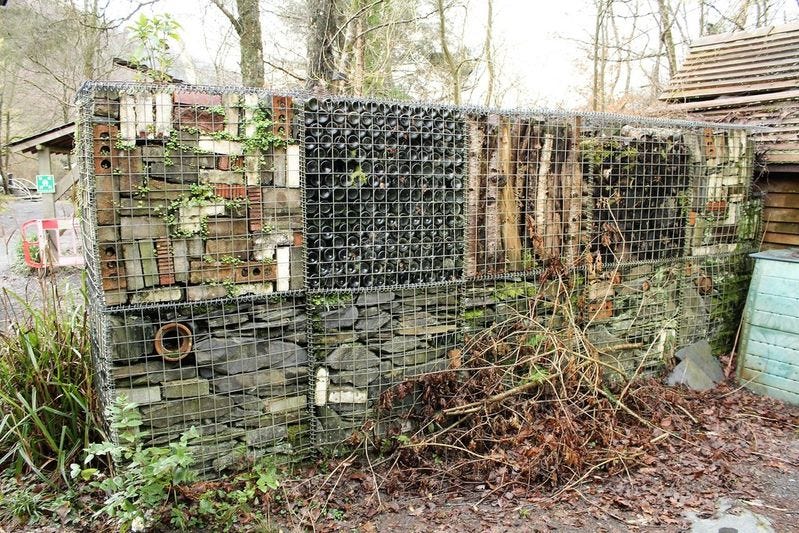
Gabions can be used as a focal point if you fill them with unique materials such as wood, glass or different combinations of rocks.
Rounded Stones vs. Flat Rocks
When designing a garden gabion, the choice of infill material dictates how the wall distributes load and how much labour is required during installation. Often you are faced with a choice of either using rounded stones like beach pebbles or cobbles, or using flat rocks like slate or sandstone.

1. Rounded Stones & River Cobbles (Poured In)
Rounded stones can be shovelled or tipped directly into the wire basket using a wheelbarrow. This can save you a lot of time when installing a gabion feature.
Spherical stones touch each other at single points. Under load, they want to roll and push outward, which can cause the wire mesh to bulge if internal cross-ties aren’t used. This can make the gabion less stable and limit its utility as seating.
The best use for Rounded Stone is in low decorative borders or projects where installation speed is critical.
2. Flat Rocks & Slate (Hand-Placed)
Flat stones like slate or cleaved sandstone are stacked by hand in neat horizontal courses. This can make for a much longer install time than pouring the rocks in.
Flat surfaces rest flush against one another, directing all weight downward toward the base rather than pushing sideways against the wire cage.
What are the best uses for flat rocks where the install time is worth waiting for? Tall retaining walls, sharp partition walls, or clean modern aesthetic designs. If you like the look of dry stone stacked walls, this is an easier way to achieve the same look
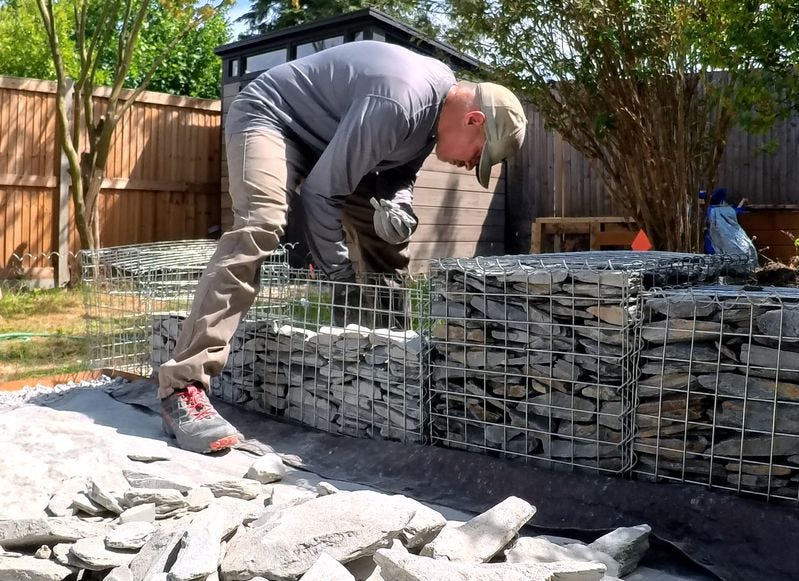
Pro Tip: The “Hand-Faced” Hybrid Trick
If you love the crisp look of hand-stacked slate but want to keep labour and material costs down:
Stack the Front: Hand-place high-quality flat slate along the exposed outer face of the basket, flat side flush against the wire.
Backfill the Centre: Shovel cheaper aggregate, crushed stone, or recycled brick fill into the hidden core behind your slate face.
Save Time & Money: You get the look of a bespoke slate wall with half the effort.
