

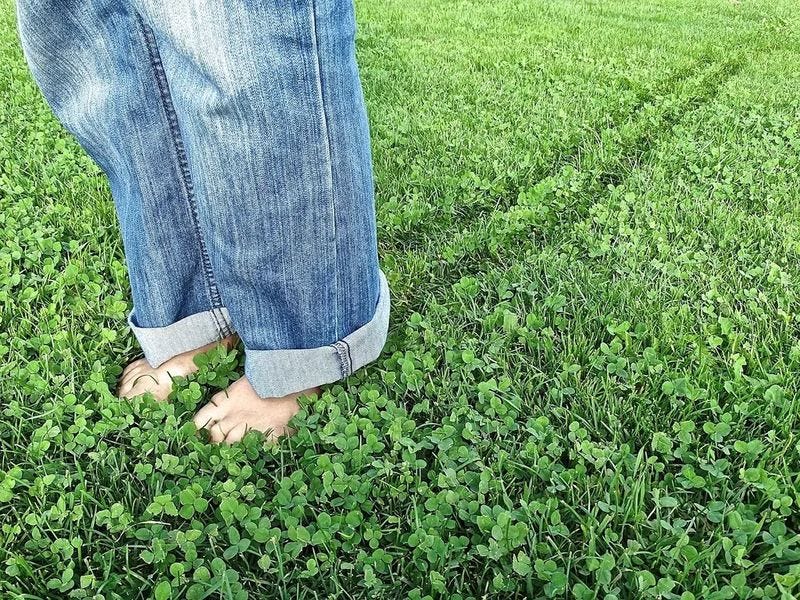
The traditional English lawn has long been regarded as a horticultural badge of honour: a crisp, uniform sheet of pure green grass maintained through relentless feeding, weeding, scarifying, and summer watering. In recent years, as British weather swings between waterlogged winters and dry, scorching summers, keeping a lawn pristine has become a difficult, resource-heavy battle.
For eco-conscious gardeners seeking a lower-maintenance, drought-resilient alternative, clover is a great solution. We have been convinced over the years that clover was nothing but a nuisance weed, but this was historically how English lawns were kept green. Combining White Clover (Trifolium repens) with fine-leafed turf grasses offers the perfect balance. When grown and installed as pre-cultivated rolled turf, a clover-grass mix delivers instant green cover, exceptional winter durability, and a self-sustaining lawn ecosystem tailored to UK soil conditions.
The Advantages of a Mixed Clover-Grass Lawn
While pure clover lawns have gained popularity on social media, they come with practical drawbacks in temperate climates like the UK. Pure clover can go dormant, melt away under heavy frosts, or leave slick, muddy patches during wet winters. A 20% to 30% clover and 70% to 80% perennial ryegrass or fine fescue mix resolves these issues entirely.

1. Superior Winter Appearance and Structure
In the UK, wet and frosty winters can cause soft-stemmed clover foliage to die back. When clover is intermingled with grass, the grass blades provide a resilient structure that holds the turf together through rain, hail, and frost. The grass maintains a neat green base throughout January and February, preventing soil erosion and keeping foot traffic from turning the garden into a mud bath.
2. Built-In Nitrogen Fixation
Clover is part of the legume family. Legumes are known as nitrogen-fixers. Through a symbiotic relationship with Rhizobium bacteria residing in its root nodules, clover captures nitrogen from the air and converts it into a soluble form in the soil. As clover leaves naturally shed and roots decompose, this nitrogen feeds the surrounding grass blades. This built-in fertilisation cycle keeps the grass lush and dark green without requiring synthetic nitrogen fertiliser, saving money and preventing chemical runoff into local waterways.
3. Remarkable Drought Resilience
Standard lawn grasses have shallow root systems, which makes them less resilient to dry conditions. As a result, lawn grass will brown off quickly during prolonged summer heatwaves. Clover has deep roots that reach far beneath the surface layer to draw up moisture. During dry spells, the deep-rooted clover stays green and shelters the base of the grass. This means the clover shades the soil and reduces moisture evaporation across the entire lawn. Just as grass keeps a clover lawn green in Winter, the clover will keep it green through summer.
4. Natural Weed and Moss Suppression
Densely woven clover stolons (above-ground runners) creep across the soil surface, filling gaps before broadleaf weeds like dandelions, plantains, or buttercups can take hold. Furthermore, because clover thrives in slightly varied soil pH levels and maintains strong ground cover, it competes vigorously against moss, a persistent headache in damp British gardens.
5. Benefits for Local Pollinators
If permitted to flower during midsummer, white clover produces nectar-rich blossoms that attract native bees, bumblebees, and butterflies. For those who prefer a clean, carpet-like finish, mowing every 10–14 days will remove flowers while preserving all the soil-building benefits of the clover foliage.

Why Rolled Turf Beats Direct Seeding
When introducing clover to a garden, homeowners can choose to sow seed in bare soil or overseed an existing lawn. However, purchasing pre-cultivated rolled clover turf offers some practical advantages:
Instant Establishment: Overseeding clover into an established lawn can be patchy and unpredictable. Clover seeds are tiny and easily washed away by heavy spring rain or consumed by birds. Rolled turf arrives fully established with a dense root network ready to bind to your soil.
Uniform Blend: Commercial turf growers use specialized seeding equipment to achieve an even distribution of clover and grass. This prevents the clover from forming isolated clumps across the lawn.
Immediate Weed Protection: Laying turf creates an instant barrier over bare soil, preventing dormant weed seeds from germinating in freshly cultivated earth.
A Step-by-Step Guide to Installing Clover Turf
Installing clover-grass turf follows similar principles to traditional lawn turfing, with a few subtle adjustments to support clover’s nitrogen-fixing abilities.
Step 1: Timing and Site Preparation
The ideal window for laying clover turf in the UK is early autumn (September to October) or spring (March to April). Soil temperatures during these periods are warm enough to stimulate root growth, and natural rainfall reduces the need for artificial watering.
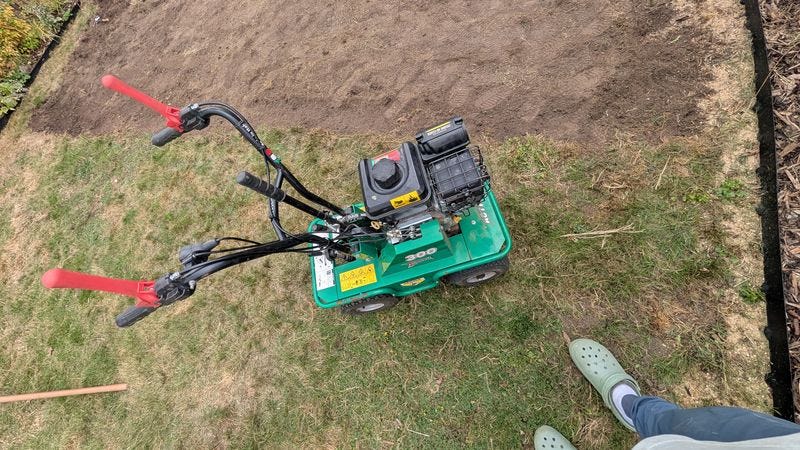
Clear the Ground: Remove all existing grass and vegetation from the existing lawn or area to be turfed. Hiring a turf-cutter provides a quick way to remove turf. Once the vegetation is removed, check the soil for any rocks or debris and remove these from the area.
Cultivate and De-compact: Dig or rotovate the soil to a depth of 150mm. If working with heavy clay soil, incorporate coarse grit sand and compost to improve sub-surface drainage. Apply at least 50mm of topsoil over the area.
Level and Firm (The “Prentice Walk”): Rake the topsoil smooth, removing any large clumps that may form. You will find it easier to rake smooth when the soil is dry. Firm the ground by walking across it with small, shuffling steps on your heels to eliminate soft pockets, then rake again to produce a fine, level tilth. When applying topsoil, you may want to do this several times and apply it in layers.
Skip High-Nitrogen Starter Feeds: Unlike standard turf installation, do not apply high-nitrogen starter fertilizers. Excess nitrogen encourages grass to overgrow and shade out the clover before it establishes, while suppressing the clover’s natural nitrogen-fixing nodules.
Step 2: Laying the Turf Rolls
Turf should be laid immediately upon delivery to prevent the rolls from overheating inside the stack and drying out. When laying the turf, you should walk and kneel on wooden boards to distribute your weight and prevent making indentations with your feet or knees.
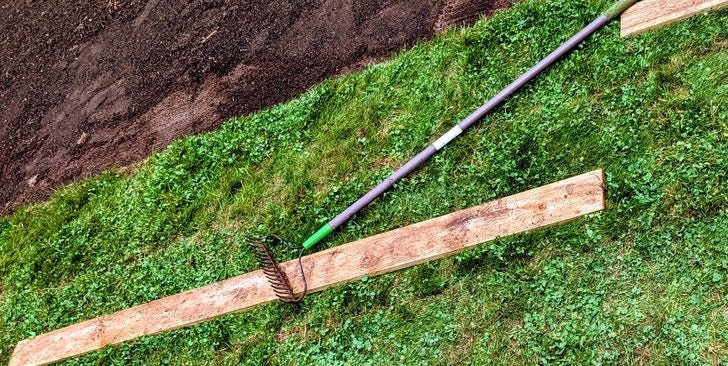
Start along a Straight Edge: Unroll the first strip along a path, border, or fence line. Avoid stretching the rolls.
Butt Edges Firmly: Push edges of adjacent rolls tightly together without overlapping.
Stagger the Joints: Lay subsequent rows in a staggered, brickwork pattern so that butt joints do not align to the row above and below.
Tamp Down for Contact: Use a flat wooden board or the back of a rake to tamp down the turf gently. Ensuring 100% contact between the turf underside and the prepared topsoil is essential for rapid rooting.
Trim Edges Cleanly: Use a sharp lawn edging iron or spade to trim turf around flower beds, trees, or curved edges.
Step 3: Establishment and First Mowing
The first three weeks are critical for establishing root connections.
Watering: Soak the new lawn thoroughly immediately after laying. Water deeply every morning and evening during dry weather for the first 14 days, ensuring moisture penetrates through the turf roll into the underlying soil. Once roots set to the subsurface (test by gently pulling a corner of turf), reduce watering frequency.
Foot Traffic: Keep pets and family off the lawn for at least 2 to 3 weeks until the roots are anchored.
The First Mow: When the grass blades reach roughly 60–75mm in height, perform the initial cut. Set your mower deck high (above 50mm) and ensure the mower blades are sharp to avoid tearing the delicate clover leaves.
Long-Term Maintenance and Care
Clover-grass lawns require far less intervention than traditional lawns, but following a few tailored practices will keep them looking their best year-round:
Mowing Height: Maintain a cutting height of 40mm to 50mm. Clover adapts to mowing by growing smaller leaves closer to the ground, creating a lush, tight carpet.
Mulch Mow: Use a mulching lawnmower whenever possible. Returning the fine clippings to the lawn recycles the nitrogen fixed by the clover directly back into the root zone.
Avoid Chemical Weedkillers: Never apply standard broadleaf selective weedkillers or “Feed, Weed & Mosskiller” products. These chemical treatments identify clover as a broadleaf weed and will kill it instantly. Hand-pull persistent weeds or let the dense turf naturally outcompete them.
Autumn Leaf Clearance: In autumn, rake up fallen leaves promptly. A thick blanket of wet leaves starves clover stolons of light during a damp British winter, leading to sporadic die-back.
A Sustainable Standard for British Gardens
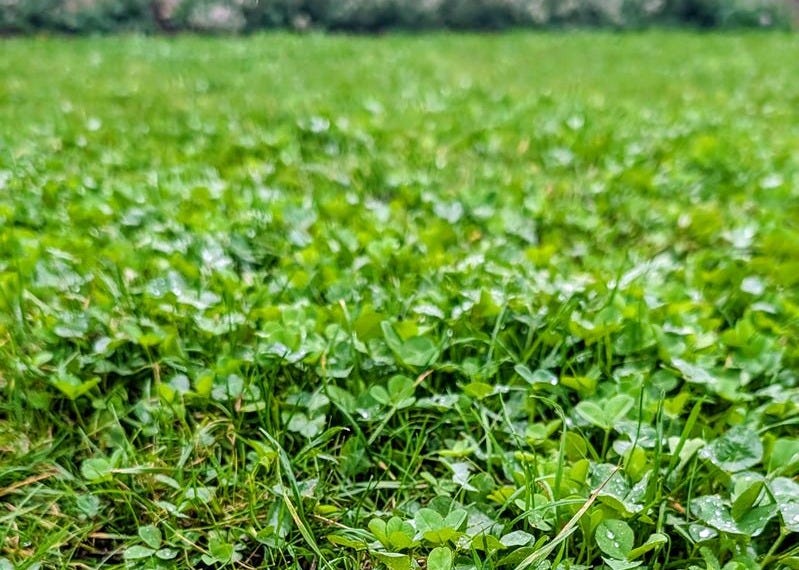
Switching to a mixed clover-grass lawn is a simple, effective way to work alongside nature rather than against it. By installing pre-cultivated clover turf, you gain all the benefits of a self-fertilizing, drought-tolerant, and pollinator-friendly green space without sacrificing the winter greenness and structural durability that British gardens require.