

How do you create a Butterfly Garden? First, let’s ask the question, “What is a Butterfly Garden”? Butterfly gardening is a way to create, improve, and maintain habitat for lepidopterans.
Lepidopteran is the collective name for all species of butterflies, skippers, and moths. Lepidopterans have four distinct life stages—egg, larva, chrysalis, and adult. To support and sustain their populations, an ideal butterfly garden contains habitat for each life stage.

The poet Ponce Denis Écouchard Lebrun called them “flying flowers”. I like this description as it emphasises the beauty they can bring to the garden, albeit very temporarily.
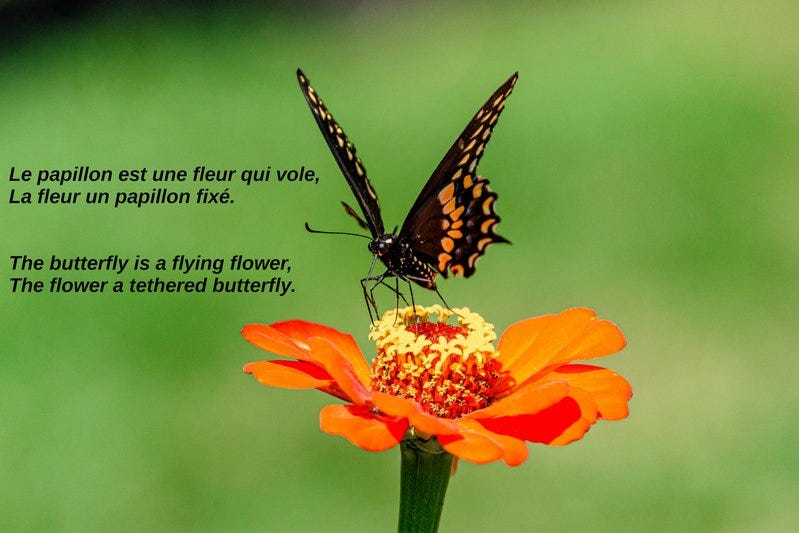
A few years back, I published a guide to butterfly gardening designed for the sun-drenched, Mediterranean climate of Southern California. I relocated and am now working in Surrey, UK. It is true that the core principles of supporting these flying flowers remain the same around the world. That said, the design of a butterfly garden requires some local knowledge and adaptation to the local climate and flora.
I spent many years designing butterfly gardens in the West Coast and Southwest of the United States, but now ply my trade in a temperate corner of England. Transitioning from the semi-arid hills of SoCal to the lush, historic landscapes of Surrey requires a shift in plant palettes and landscaping technique.

If you are in the Surrey Hills AONB, a suburban garden in Carshalton, or walking a dog in Addington Hills, you are part of a shared natural identity. Surrey is dominated by a landscape of chalk downs and wooded commons. This landscape extends beyond the actual county of Surrey into Outer London. Residents of urban areas of Sutton and South Croydon still feel a connection with the Surrey countryside. Their gardens can serve as stepping stones for butterflies moving between the North Downs and London.
Sun Traps
In my previous post, I focused on the needs of the Western Monarch on the West Coast of the United States. As you may know, this region is very sunny. One of the important requirements to support butterflies is the need for them to bask in the sun. In Surrey, we have a maritime climate that is blessed with abundant sunshine in the Summer months.
Butterflies are cold-blooded and cannot fly unless the air temperature reaches at least 16°C (60°F). In the UK, this makes a sun trap one of the most critical elements of your design for a butterfly garden. A Sun Trap is all about maximising thermal gain. Sun Traps are areas of your garden that are exposed to the sun and can trap the heat.
A simple example of a sun trap is a rocky area that absorbs the sun and radiates warmth back as it cools down. Another example is a tree stump with dark wood that feels hot to the touch after soaking up rays of sunshine.
You can either create a sun trap yourself, or you may already have areas in your garden like those I just described. If you are not sure, try walking barefoot around your garden in the mid-afternoon on a sunny day in Summer. When you find ground that you can barely stand on without burning the soles of your feet, you have a sun trap. Sun Traps need to provide security too, so sun traps that are on raised ground work well. Butterflies will search for sun traps that are safe to land on, or crawl to, so that they can warm up and start their day.
Essential Butterflies of Surrey
Before you plant, you must know who you are inviting. A Surrey garden should cater to a some of these local species:
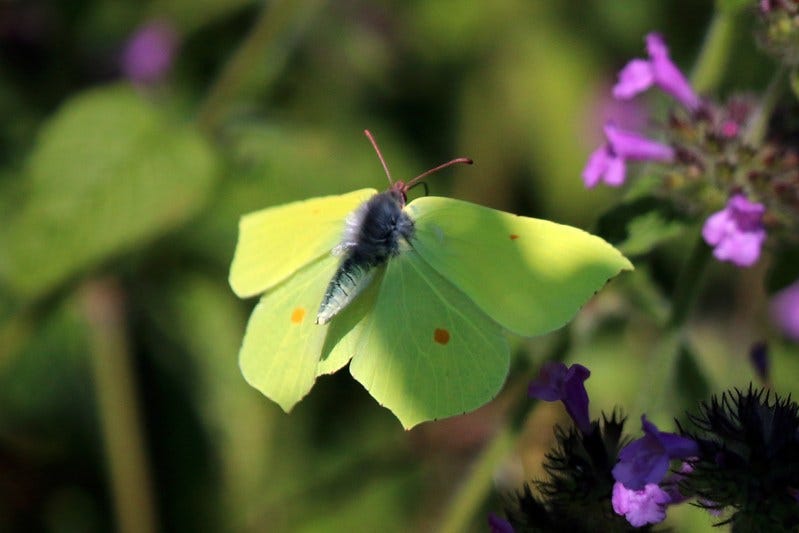
Common Brimstone (Gonepteryx rhamni)
Often the first sign of spring, this leaf-shaped butterfly is a frequent visitor to Surrey gardens.
The Peacock (Aglais io)
With its striking “eyes,” this is one of our most recognizable garden residents.

The Holly Blue (Celastrina argiolus)
Particularly common in the suburban gardens of Sutton and Croydon, where it flits high around holly and ivy.

The Orange-tip (Anthocharis cardamines)
A spring specialist that brings a burst of white and vibrant orange to our flowerbeds.

The Red Admiral (Vanessa atalanta)
A powerful flyer often seen on Buddleja and rotting fruit in late summer.

The Two-Tiered Planting Strategy: Nectar and Host Plants
As I noted in my earlier guide, a successful butterfly garden must provide for the entire life cycle. This means offering “nectar bars” for adults and “nurseries” for caterpillars.
1. The Nectar Palette (Adult Food)
Butterflies are attracted to warm colors—red, yellow, and orange—and prefer flowers that form clusters, providing a stable landing platform. To keep your garden productive throughout the Surrey growing season, aim for a succession of blooms:
Spring: Primrose (Primula vulgaris), and Dandelions (Taraxacum officinale) provide essential early energy for butterflies emerging from hibernation.
Photo by henry perks on Unsplash Summer: Lavender (Lavandula angustifolia), Marjoram (Origanum majorana), and Scabious (Scabiosa ssp.) are magnets for the Common Blue and Small Tortoiseshell butterflies. The aptly named Butterfly Bush (Buddleja davidii) is a classic choice for traditional buttefly gardens in the UK, however it is an invasive species and I do not use it in my designs. Meadowsweet (Spiraea ssp.) or Common Lilac (Syringia vulgaris) are a better choice for a similar aesthetic.
Autumn: As temperatures dip, late-season fuel is vital. Michaelmas Daisies (Aster Amellus), Sedum (Hylotelephium ssp.), and flowers of Ivy (Hedera helix) are critical for species like the Comma and Red Admiral.


_male_in_flight.jpg)
2. The Larval Palette (Caterpillar Food)
In my post about American butterfly gardens, I wrote about providing Milkweed for Monarchs. For these butterflies, milkweed is an important host plant for caterpillars. In Surrey and the rest of the British Isles, the most important host plant is the oft-maligned Stinging Nettle (Urtica dioica).

Nettle is the primary nursery plant for the Peacock, Red Admiral, and Small Tortoiseshell. If you have a corner of your property that can be left “wild,” a patch of nettles in a sunny, sheltered spot will do more for butterfly populations than almost any other plant.
For those with smaller spaces, consider:
Bird’s-foot Trefoil (Lotus corniculatus): A beautiful, low-growing yellow wildflower that hosts the Common Blue.
Garlic Mustard (Alliaria petiolata) and Honesty (Lunaria annua): Essential for the caterpillars of the Orange-tip.
Holly (Ilex aquifolium) and Ivy (Hedera helix): Provides for the Holly Blue and offer excellent shelter in the Winter.
Designing for the Surrey Climate: Sun, Shelter, and Water
The layout of your garden is just as important as the plants you choose.
Sun Traps and Basking Rocks: Since butterflies need to warm up to fly, place flat, dark rocks in the sunniest part of the garden. These act as thermal heaters where butterflies can bask before starting their day.
Windbreaks: Surrey can be breezy, especially on the North Downs slopes. Plant taller shrubs, like Mock Orange (Philadelphus ssp.) or Hazel (Corylus ssp.), on the side of prevailing winds to create a calm micro-climate.
The Puddling Station: Butterflies need minerals and hydration and they enjoy a mineral bath. If you have clay soil, a small puddle in a muddy patch of your garden is enough for most butterflies to bathe in. In dry spells, a shallow saucer filled with sand and kept damp with a little salt-free water and compost tea will suffice.
Overwintering Sites: Many of our butterflies, such as the Brimstone and Peacock, spend the winter as adults. Avoid the urge to “tidy up” your perennials in late autumn. Leaving dead flower heads and hollow stems provides vital protection from the frost. Thick growths of ivy on walls or fences are also excellent overwintering habitats.
Butterflies and Wild Gardens
There is one important consideration for creating a butterfly garden. You must embrace a wild garden aesthetic. A formal, heavily manicured garden with high pesticide use is often a desert for wildlife. By shifting toward a native wildflower or perennial mixed-bed garden, you create the complexity and shelter that butterflies need to thrive. Avoiding pesticides is non-negotiable; these chemicals are indiscriminate and will kill the very visitors you are trying to attract.
Joining the Conservation Effort
Butterfly populations in the UK are under significant threat due to habitat loss. However, as the 2021 recovery of the California Monarch Butterfly showed, the collective effort of individual gardeners can make a measurable difference.

By planting for the species that call the North Downs their home, you are doing more than just beautifying your property. You are anchoring your garden into the wider Surrey ecosystem, creating a link in a chain that stretches from the historic commons of the Surrey Hills to the suburban green spaces of London. Whether you have a large estate or a small patio, every nectar-rich bloom and larval host plant counts.