

The recent heatwave I experienced here in Surrey served as a stark reminder: our gardens and our watering habits need to adapt to a changing climate. The UK tend to think of itself as a land of gentle rain and mild summers. That is no longer the case. Recent summers have proven that intense, prolonged heatwaves are becoming the new normal. Plants are very adaptable to heat, but sharp changes in temperature can put them into shock.
The good news is that we can help our landscapes get through the heatwaves. We alreasy know some of the tricks for getting plants through a cold Winter, but tips on keeping plants thriving during a 35C+ heatwave are not as easy to find.
Watering: Quality, Not Quantity
The most common mistake is a “little and often” approach. During a heatwave, surface watering can evaporate before it reaches the roots. Plants also tend to go dormant during extreme heat, in an effort to conserve moisture and energy. This means that they are not able to absorb moisture through their roots during the heatwave.
You need to give your plants a thorough soaking, before the heat of the day. If that means getting up at 5am and watering your hedge in your pyjamas, then that is what needs to be done!
When a prolonged heatwave is in the forecast with high overnight temperatures, you should stop watering established plants before those days as the plants will have gone into full dormancy. Warm and excessively wet soil can lead to root rot if the plant is dormant.

Go Deep: Water thoroughly, according to your plants needs. Most shrubs will benefit from a soaking of 1 gallon of water. This is generally a good habit as it encourages roots to grow deeper into the soil where it stays cooler and moister.
Target the Roots: Avoid wetting the leaves, as this water will quickly evaporate. The exception to this rule are for conifers as they are adapted to early morning fog in the woods and forest they are native to. Use a watering can or hose aimed directly at the base of the plant. Cover the area immediately under the canopy of the plant, not around the plant.
Timing is Everything: Water early in the morning. You can water late in the evening too but during Summers in Surrey, our sun doesnt set until quite late so unless you want to be watering your plants at midnight, I dont recommend this. This gives the water a chance to soak into the ground before the sun evaporates it away.
Mulching: The Garden’s Sunscreen
Think of mulch as a protective blanket for your soil. A 2–3 inch layer of organic material (like compost, leaf mould, or bark chips) locks in moisture, regulates soil temperature, and suppresses competing weeds. Carefully placed rocks can also be effective in shading areas that are prone to drying out in intense sun.
Nurse Rocks
One of the most effective, low-tech tools for a young or struggling plant is the “nurse rock.” In wild landscapes, you can often see plants thriving in the shadow of boulders or stones. You can replicate this by placing a stone near the base of a plant on the southwest side.
During the hottest part of the day, the rock acts as a heat shield, casting essential shade on the plant’s crown. As temperatures drop at night, the rock helps manage soil moisture because water will condense on the rock’s surface. It’s a simple, sculptural way to give your plants an extra edge against the midday sun.

Climate-Resilient Planting
The most effective way to manage heat is to choose plants that are naturally adapted to survive it. Some of the species I use in my designs have built-in survival strategies:
Drought-Tolerant Blues
English Lavender (Lavandula angustifolia) and Blue eryngo (Eryngium planum) are built for the sun. Their foliage is often silvery or waxy to reflect light and reduce moisture loss, making them perfect candidates for full-sun spots.

Deep-Rooted Meadow Plants
Yarrow (Achillea millefolium) is exceptionally tough; its fern-like leaves are fantastic at minimizing transpiration, and once established, it rarely needs a drink. Testament to this is that Yarrow is able to survive hot summers in Calfornia. It is native to the Golden State as well as the UK.

I often pair Yarrow with Queen Anne's Lace (Daucus carota). Both of these plants develop deep, resilient taproots that reach down into the soil to find moisture long after the surface has dried out.
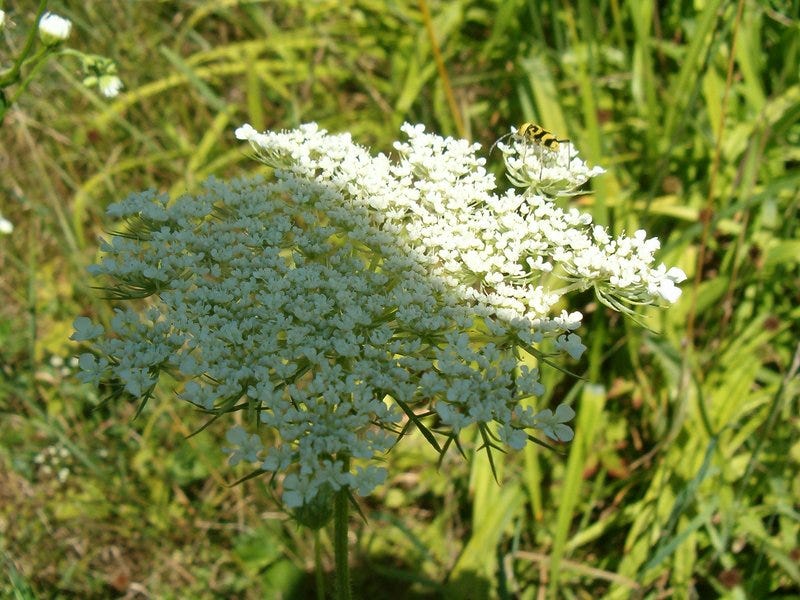
Structural Anchor
Yew (Taxus baccata) has a reemarkable ability to thrive in a range of soils makes it a vital structural backbone that stays resilient long after more delicate shrubs have wilted. Once established, Yew is very drought tolerant.
The Future of British Summers
It is impossible to discuss landscaping in 2026 without acknowledging the broader climate picture. London and the South East are increasingly designated as seriously water-stressed. Research suggests that without significant infrastructure investment and a shift in how we manage water, we could face severe supply shortfalls by 2040.
Future summers will likely see more erratic rainfall and more frequent heatwaves. To address the potential water shortages and hosepipe bans, here are some ideas to make the most of this precious resource:
Harvest the Rain: Install water butts and water retention devices like primitive soak-aways in your gardens.
Design for Retention: Consider how your garden handles water. Are you letting rain run into the drain, or are you creating pathways for it to soak into your borders? You can add shallow ditches filled with stones, to divert water into your garden borders.
Know When to Pause
During extreme heat, plants go into a survival mode. This means they go dormant to conserve moisture and energy. They need a bit more TLC during this time.
Stop Pruning and Planting: Tasks like transplanting or heavy pruning add stress to a plant that is already struggling to conserve energy. Save these jobs for when the temperature drops.
Patience with Lawns: If your grass has turned brown, it’s dormant, not dead. Raise the blades on your mower to keep the grass slightly longer this shades the soil at the base and keeps it greener for longer.
