

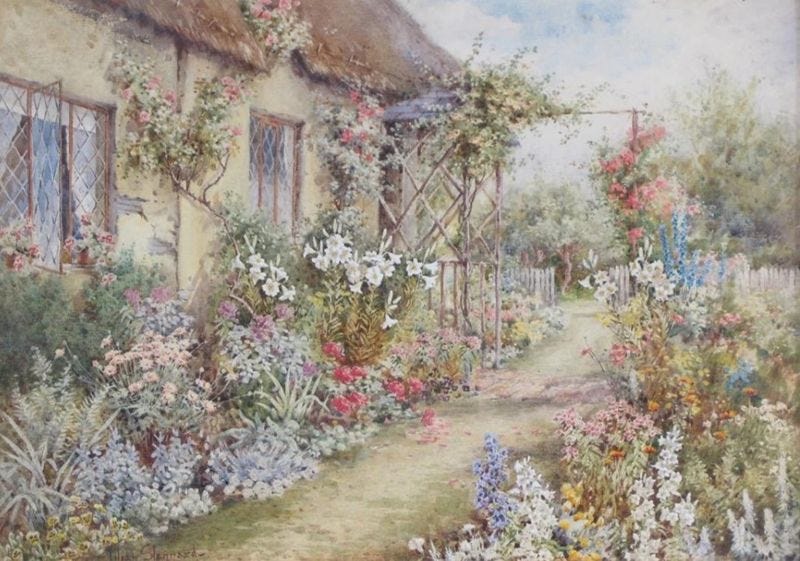
The Cottage Garden Style is an approach to gardening that emphasizes charm, abundance, and informality. The style is a dramatic contrast to manicured turf grass, formal hedges, and rigid geometric topiary. The classic cottage garden embraces a sense of lush abundance. Vines spill generously over weathered picket fences, tall floral spires sway softly in the breeze, sweet scents drift through the air, and flowers self-sow wherever their seeds happen to land.
This timeless gardening style is deeply rooted in social history, changing economics, and evolving art movements. In recent times, it is undergoing a revival as gardeners embrace a more natural look to create softer, biodiverse, and resilient outdoor spaces.
Key characteristics of the cottage garden style
Traditional cottage gardens share fundamental design traits:
Informality
The hallmark of the cottage garden is its informal, almost wild appearance. Plants are grown closely together, often overflowing onto pathways or blending seamlessly into one another. Unlike formal gardens with rigid layouts, cottage gardens embrace a natural, relaxed look.
Dense planting
Cottage gardens are known for their abundance. Plants are packed together tightly, creating a lush, layered effect. This approach minimises the appearance of bare soil and maximises space, a nod to the garden’s historical roots.
Mixed planting
A quintessential feature is the mix of flowers, herbs, and vegetables, often growing side by side. This eclectic combination reflects the practical origins of cottage gardens, where plants served decorative, culinary, and medicinal purposes.

Traditional and heirloom plants
Many cottage gardens favour old-fashioned heirloom varieties that evoke nostalgia and history. Common choices include roses, hollyhocks, foxgloves, peonies, lavender, daisies, and sweet peas. These plants contribute to the garden’s romantic and vintage atmosphere.
Seasonal interest
A well-planned cottage garden offers blooms and interest throughout the year. By choosing a mix of plants with varying bloom times and evergreen foliage, gardeners ensure their spaces remain vibrant in all seasons.
Informal Structures
Softened hardscaping is essential. Weathered timber, gravel paths, rustic brick, and moss-covered stone walls anchor the planting and keep it from looking chaotic.
Pollinator friendly
Cottage gardens are often havens for wildlife. Their diversity attracts bees, butterflies, and birds, making them ideal for fostering biodiversity. Hardscape features, winding paths, picket fences, trellises, and arbours draped with climbing plants like roses or clematis are common elements. These features add structure while maintaining the garden’s informal character.

A Deep Dive into History: From Survival Plot to Romantic Ideal
The cottage garden style did not begin as an aesthetic trend or a luxury hobby. It started as a humble survival strategy for the rural working class. Its origins lie in the small, functional gardens of rural cottages in medieval Europe, where practicality and beauty intertwined. Over time, this utilitarian concept evolved into a design style that is celebrated for its unstructured planting schemes and naturalistic appeal.
1. The Medieval and Elizabethan Eras (14th–16th Centuries)
The earliest cottage gardens belonged to English peasant cottars. Cottars were tenant farmers who worked small plots of land attached to their rented homes. Every square inch of soil had to serve a functional purpose.
Strict Utility: The plot was filled with vegetables, fruit trees, beehives for honey, and small livestock such as chickens and pigs.
Dual-Purpose Flora: Flowers were rarely planted purely for decoration. Instead, every plant had to earn its keep. Marigolds and nasturtiums acted as natural pest deterrents. Lavender, thyme, and rosemary provided kitchen seasonings and medicinal remedies. Heavily scented blooms like sweet violets and roses were harvested to mask bad odors indoors.
2. The Victorian Era and the Industrial Revolution (19th Century)
As the Industrial Revolution swept across Britain, millions of rural workers migrated to smoke-filled factory towns. As a result, the countryside and the traditional peasant cottage became romanticised in popular culture. At the same time, wealthy Victorian estate owners were favoring rigid, highly artificial “carpet bedding,” which involved planting tender tropical flowers in precise, geometric patterns every single summer.
A cultural backlash soon emerged. Writers such as John Ruskin and garden pioneers including Gertrude Jekyll and William Robinson pushed back against the artificiality of formal Victorian beds. Working alongside the broader Arts and Crafts Movement, Jekyll championed informal drift-style planting, naturalistic color schemes, and traditional cottage flowers such as hollyhocks, delphiniums, and cottage pinks. The modern ornamental cottage garden was born, shifting the style’s core emphasis from survival to artistic expression.
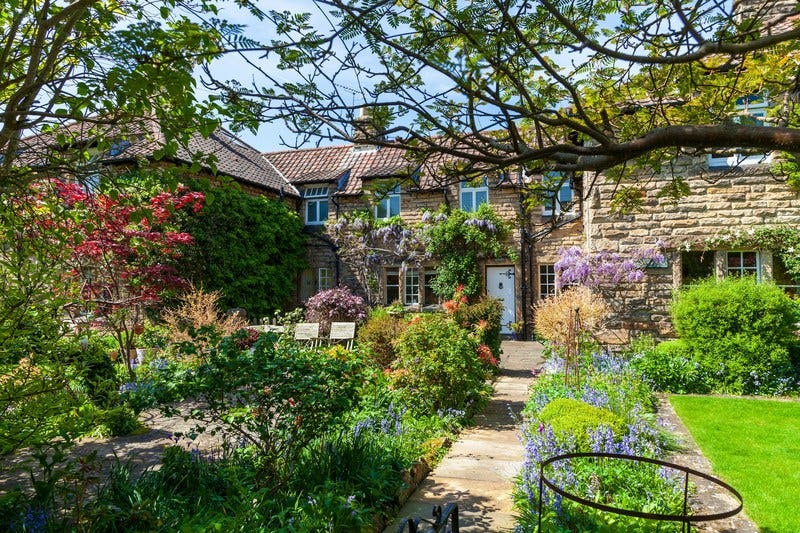
3 Contemporary Takes on the Cottage Garden
Today’s home gardeners are adapting cottage design principles to fit suburban lots, tiny urban courtyards, changing climates, and busy schedules.
The Modern-Minimalist Cottage Garden
Classic cottage gardens can sometimes feel visually chaotic. Contemporary landscape designers solve this by applying color restraint.
Rather than a riot of mixed bright colors, modern-minimalist gardens rely on a strict monochromatic or two-tone palette, such as cool whites and greens, or deep purples and muted pinks.
Designers interplant romantic, soft perennials with architectural ornamental grasses such as Calamagrostis (Feather Reed Grass) or Pennisetum. The fine blades of grass add clear structure and movement without breaking the informal, airy feel.
The Native & Climate-Resilient Meadow
Traditional English cottage plants like delphiniums and hydrangeas often require substantial fertilizer, rich soil, and high water inputs. Eco-conscious gardeners are recreating the cottage aesthetic using climate-resilient and native plants adapted to their local rainfall and soil types.
By incorporating drought-tolerant native perennials like Coneflowers (Echinacea), Columbine (Aquilegia), and Yarrow (Achillea), gardeners create vibrant habitats for local bees, butterflies, and birds while reducing seasonal water use.

The Edible Urban Micro-Plot
Echoing the style’s medieval roots, city dwellers with limited space are blending edible plants seamlessly into flower borders.
Vegetables and fruits are grown directly alongside ornamental flowers rather than isolated in back-corner raised beds.
Deep purple kale, rainbow Swiss chard, and frilly lettuce varieties serve as colorful foliage plants; climbing cherry tomatoes and pole beans cover decorative trellis arches; and alpine strawberries act as living groundcovers around the bases of roses.

Design Playbook: How to Get the Look Anywhere
You don’t need an old English stone cottage to build a cottage garden. You can establish this style in any suburban front yard or urban patio by following a few simple spatial techniques:
Ditch the Straight Lines: Avoid planting in rigid rows or setting straight bed edges. Create swooping, curved borders and allow low-growing plants like sweet alyssum or creeping thyme to spill over onto paths.
Plant in Visual Waves (Graduated Heights): Place tall focal plants (hollyhocks, delphiniums) toward the back of borders or the center of island beds. Surround them with medium bushy perennials (salvias, phlox) in the middle, and finish with low-growing, spreading groundcovers at the front.
Use traditional features: Incorporate rustic hardscape elements such as weathered stone paths, wooden fences, or wrought-iron gates to enhance the cottage aesthetic.
Embrace Self-Seeding “Volunteers”: Let easy-going annuals and biennials like Nigella (Love-in-a-Mist), poppies, and Verbena bonariensis drop their seeds in the autumn. Next spring, they will pop up in unexpected gaps, giving the garden an authentic, organic feel that looks designed by nature itself.

Why choose the cottage garden style?
The cottage garden style appeals to those who value a connection with nature, enjoy an informal and free-spirited aesthetic, and wish to create a garden that feels alive and ever-changing.
It offers a space for creativity, blending beauty and functionality, while fostering biodiversity.
Whether in a sprawling rural yard or a cosy urban plot, a cottage garden is a timeless retreat filled with colour, texture and charm.