


Surrounding the massive city of London is a green belt where many suburban towns and villages are occupied by people who commute into London. This area is known as the “home counties”. These counties are named Surrey, Berkshire, Buckinghamshire, Essex, Hertfordshire and Kent.
Some fun facts about the home counties:
Kent is known as “the garden of England”.
Surrey is the most wooded county in England.
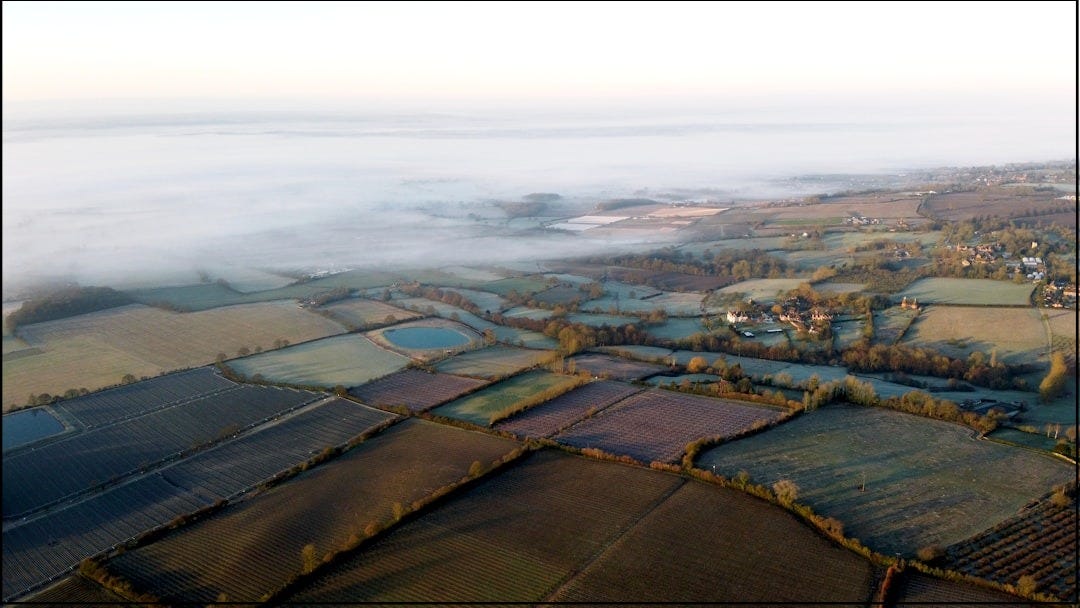
Surrey is where I work, where I spend a lot of time visiting clients and observing native plants (botanizing).
When I walk through a typical garden in Surrey, the homeowners often view their most reliable shrubs and herbs as “quintessentially British.” Yet, much of what we consider the foundation plants in an English garden is actually a living archaeological record of the Roman occupation of this area, back when neighbouring London was known as Londonium.
The Need for Native Plants in UK Gardens
The UK has a lot of native plants available for use in home gardens.
Using native plants is essential in a time when resources are becoming increasingly sparse, as they should be able to survive without too much human intervention like fertilizer or additional irrigation.
The Floristic Region
So, what is a native plant exactly? When I lived in California, it was defined as the plants that were endemic to California before the first Spanish, Russian or other type of colonists came to the region now known as the Golden State.
That said, the area we call California is not the extent of the range of California Native Plants. The range of California native plants includes: Baja California in Mexico, southern Oregon, and some parts of Nevada and Arizona. This range is known as the floristic region of California.
The British Isles is the floristic region for the UK. Unlike California, it has seen multiple waves of migration over thousands of years in recorded history. For this reason, I am writing a new history series on the major migrations to the British Isles and their contribution to the native plants of the UK.
The Roman Invasion
As part of a new series exploring how successive waves of human migration have reshaped the British Isles’ flora, we begin in 43 AD.
The Roman arrival was more than a military conquest; it was a horticultural revolution. For the Romans, a garden was not merely a source of food, but a symbol of Romanitas—civilisation, order, and a tangible link to the Mediterranean home they left behind. These colonists created some of the earliest recorded gardens in the UK. A lot of how they designed their gardens is already covered in my post about Roiman Garden Design. In today’s post, let’s look at some of the “quintessentially British” plants that were brought here by the Romans and still used in modern Surrey, 2,000 years after the Romans set foot in the SouthEast of England.
The Architect’s Foliage: Acanthus mollis
No plant better illustrates the Roman influence on design than Acanthus mollis, or Bear’s Breeches. To a garden designer, the Acanthus is valued for its bold, architectural silhouette and its ability to thrive in the dappled shade of a modern residential plot. To the Romans, it was the epitome of architectural design.
Its deeply lobed, glossy leaves served as the primary inspiration for the Corinthian order of architecture. According to legend, the sculptor Callimachus was inspired by a votive basket overgrown with Acanthus leaves pushing up through a roof tile. In the capitals of Corinthian columns, the stylised leaves of Acanthus mollis are carved into the stone.

By introducing this plant to Britain, the Romans weren’t just planting a perennial; they were sowing the aesthetic of the Mediterranean into British soil. When you see its towering flower spikes in a Surrey border today, you are looking at an ornamental plant that has remained here, 2,000 years after the Romans arrived.

Rosemary
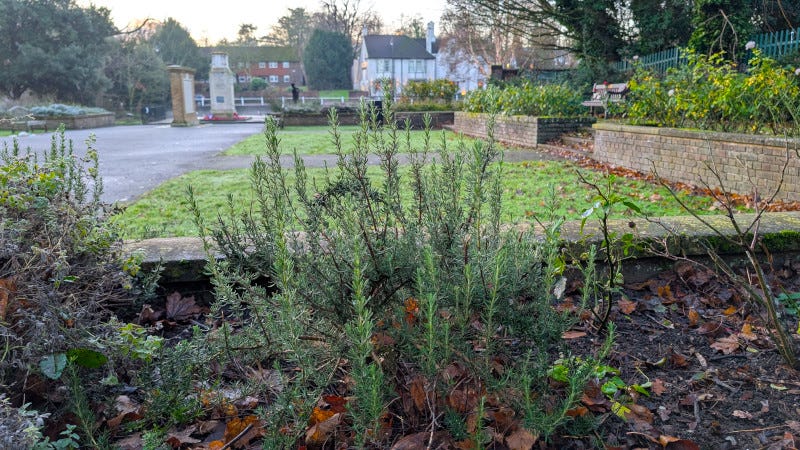
Rosemary is so often integrated into British landscapes that it is easy to forget it is a Mediterranean native. The Romans brought Salvia rosmarinus, AKA the “dew of the sea”, mainly for use as medicine and in rituals.
For the average Roman, rosemary was the herb of remembrance and fidelity.
Rosemary was woven into wreaths for students to improve their memory during exams. Romans used Rosemary cuttings in wedding bouquets and funerals. This association with remembrance survived the fall of the Roman Empire and persisted into medieval England.
In Act 4, Scene 5 of Hamlet, Ophelia names plants that were known for their capacity to ease pain, particularly inward, emotional pain.
There’s rosemary, that’s for remembrance; pray, love, remember;
William Shakespeare,
In a 21st-century Surrey garden, Rosemary serves a dual purpose: firstly as a structural evergreen and also a herb for cooking.
What is more interesting is the bigger story behind the plant. Imagine hosting a summer lunch near a rosemary hedge; remind your guests that the pungent scent of Rosemary would have been as familiar to a villa owner in Roman Britain as it is to us in a Reigate cottage today.
Boxwood and Sweet Chestnut
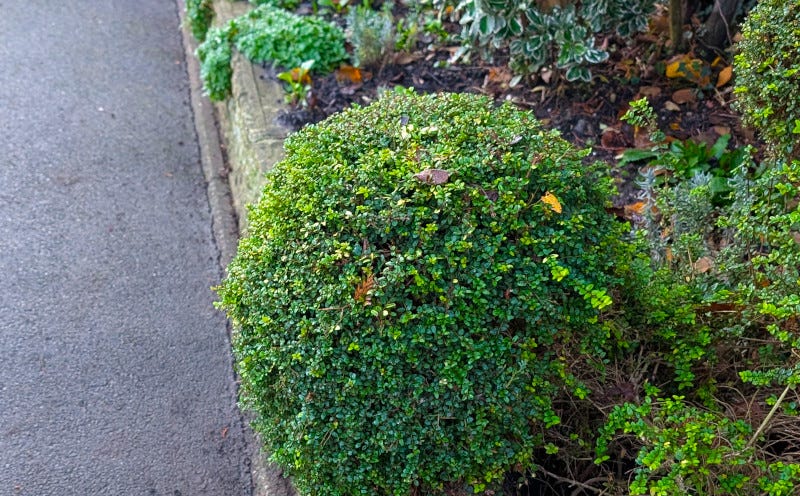
Before the Romans, British landscapes were either utilitarian or wild. The Romans introduced the concept of the ars topiaria—the art of clipping and shaping plants. They brought Buxus sempervirens (Common Boxwood) to create the low, formal hedging that defined their peristyle gardens.
Beyond aesthetics, the Romans also landscaped for long-term sustenance. The Sweet Chestnut (Castanea sativa) was introduced to provide a reliable source of flour (pollard) for the legionnaires.
These trees, many of which are found as ancient, twisted giants in the Surrey Hills, are one of the most enduring relics of the Roman occupation. Sweet Chestnut trees are known to live for at least 700 years in natural habitats. Stands of Sweet Chestnut continue to grow here, and have become naturalised immigrants to the UK landscape.

A Layered Heritage
When I dig into the plants of the Roman era, I realise that often a “native” British garden is, in fact, a beautifully curated collection of immigrant species. These Mediterranean plants were brought by the Romans, who sought to find comfort in a cold, northern province by surrounding themselves with the textures and scents of home.

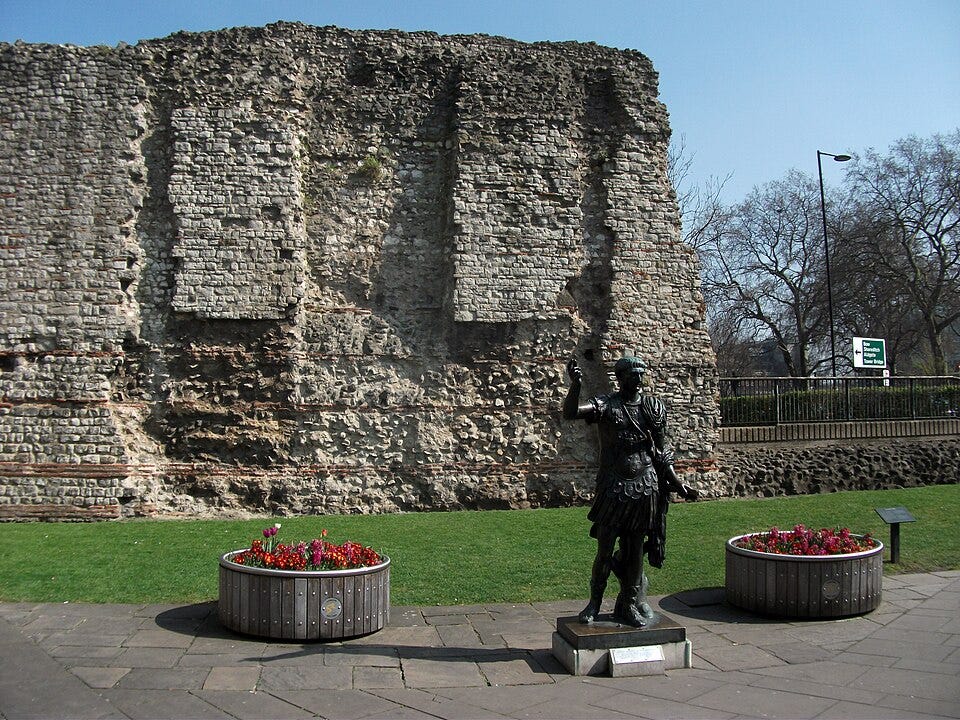
The Roman Emperor Trajan

Emperor Trajan features often in symbols of Rome. He is often featured in modern monuments related to Roman London as “The emperor who never came — but whose system stayed.”
Although Emperor Trajan never set foot in ancient Britain, his influence is still written into the landscape. Trajan’s reign marked a shift across the Roman Empire from conquest to consolidation, embedding the idea of permanent frontiers, stable provinces, and long-term investment in places such as Londinium.
This was the moment when Britain became not just occupied, but actually settled. It was now administered, planned, and landscaped with confidence by the Roman occupiers. The gardens created during this period were expressions of Romanitas: the imposition of order on nature through design.
Plants like Acanthus mollis, already loaded with architectural symbolism in the Mediterranean world, translated that imperial aesthetic directly into British soil, preparing the ground for the ornamental traditions that still shape gardens in Surrey today.
Preview: Saxon England
Looking forward to the next post in this series: the arrival of the Saxons in the 5th century. The Roman era in Surrey ended in 410 AD, when the Roman administration and legions withdrew from the British Isles.
In the next piece of British garden history, you will see a shift from architectural and ornamental design toward a more practical and pastoral one.
For now, when you next smell the pungent aroma of a Rosemary shrub or admire the sculptural form of Acanthus, remember that you are treading on a landscape first envisioned by a Roman gardener nearly two thousand years ago.
