

I am a garden designer based in the UK. The mild climate of the British Isles supports many different plants for my designs.
Many of these are native to the British Isles as indigenous native plants, and many are naturalised natives. As a reflection of the UK’s multicultural society, the native plant palette reflects the many migrations in the recorded history of Great Britain.

In a previous post, I wrote about the Roman contribution to native plants that we still use in Surrey gardens. Today’s post is about the Saxon contribution.
UK Native Plants: The Roman Legacy

The Roman arrival was more than a military conquest; it was a horticultural revolution. For the Romans, a garden was not merely a source of food, but a symbol of Romanitas—civilisation, order, and a tangible link to the Mediterranean home they left behind. These colonists created some of the earliest recorded gardens in the UK. Let’s look at some of the “quintessentially British” plants that were introduced here by the Romans and are still used in modern Surrey, 2,000 years after the Romans set foot in the Southeast of England.
The Saxon Botanic Migration
The Romans left Surrey in 410 AD. During the 5th and 6th centuries, Surrey was conquered and settled by the Saxons, who came from north-west continental Europe. The Saxons were Germanic tribes that helped create the English language. Before the Saxons arrived, most Britons spoke Latin or a Celtic language.
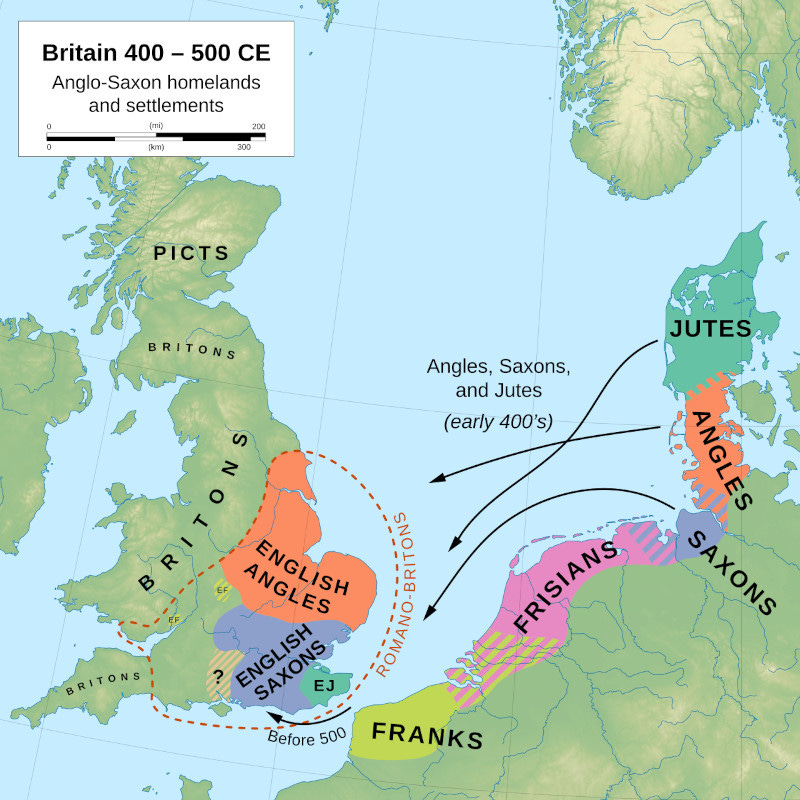
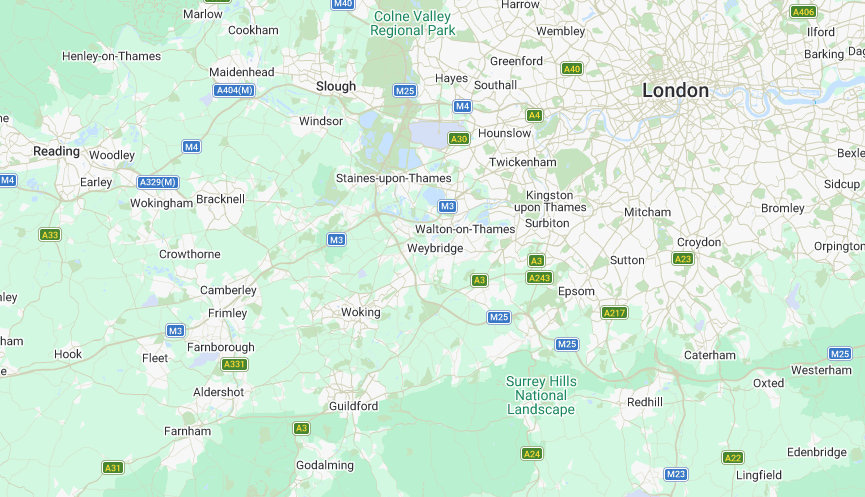
In Surrey, we can tell a little about the Saxons by looking at a contemporary map. On a 2026 map, you can see names of Saxon tribes that settled in Surrey have been used in place names. Some example tribe names:
The Romanesque Garden Style
The Romans brought Rosemary and Acanthus with them when they migrated to Britain. It would be reasonable to assume the Saxons also introduced and naturalised new plants.
The Godhelmingas and Woccingas tribes must have brought some plants or seeds with them, but it is uncertain which plants they used, as no written records survived to the modern age.
I admit, researching this period of UK garden design history was not easy. There is a reason they call this period the Dark Ages. It is hard to get any verifiable history.
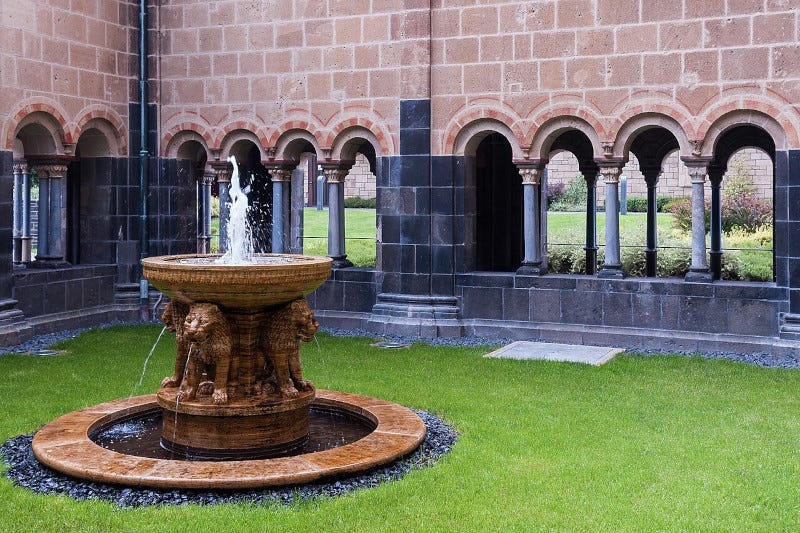
Even the architects of the Saxon era are mostly unknown until later in this period, who were classified as Romanesque. Romanesque is the name of a contemporary Saxon style because it borrowed heavily from Roman designs. Most of the works in this style were built on the continent, with the finest example being the Maria Laach Abbey in Rhineland-Palatinate.
During this time, the only available design textbooks were ancient texts from the Roman Empire. The fall of the Roman Empire created a power vacuum that plunged Western Europe into an intellectual darkness.
Roman texts were maintained and collated by the Church, and monks designed most of the gardens I have learned about from this period. I wrote about this in my more general post about Garden Design in the Middle Ages.

This earlier post was written using information I learned from Rhett Beavers, one of my favourite instructors when I studied Landscape Architecture. This chapter in design history was brief and not hugely informative during my training. As a historian of Garden Design, Rhett gave me enough of a taste for this period of Garden History to make me want to really dig into it. The following is what I have learned about Saxon Garden Design, with a focus on Surrey, England.
Saxon Gardens of Surrey
I have recently dug more into this.
Specifically, I dig how the Anglo-Saxons designed their gardens, and the plants they introduced to Surrey and other parts of Southern England. As this research required some leaps of faith, please feel free to comment or DM if you have any corrections.
Archaeobotany
Using archaeobotany (the study of ancient seeds and pollen) and linguistic clues in Old English, we can presume what plants the Saxons brought with them and cultivated as they settled in Surrey.
The Leek Garden
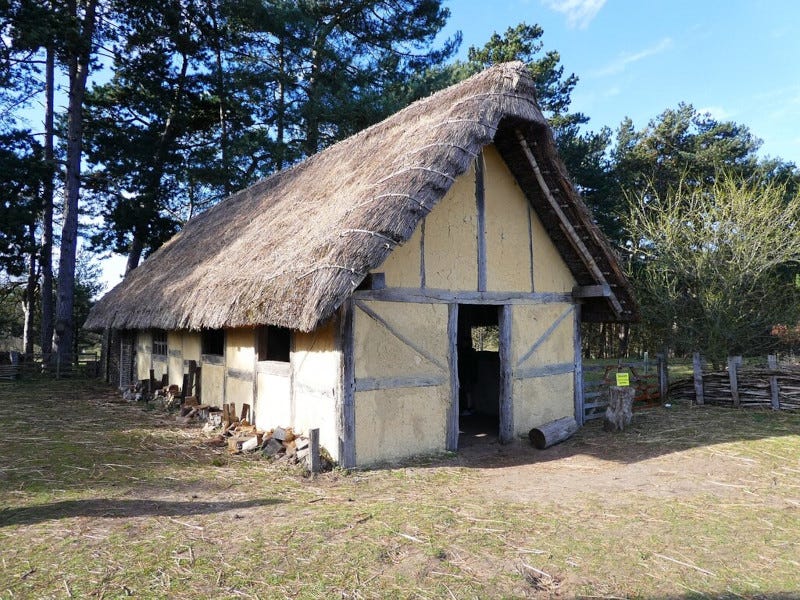
While the Romans loved formal villas and symmetry, the Saxons were more focused on farming and edible gardens. The Saxons created the “leac-tun”, which is Saxon English for “Leek Garden”.
The “Leac” (Leeks and Onions)
The Saxons held Leeks and Onions (Allium ssp.) in high regard as the most beneficial and occasionally ornamental plants in their gardens. Their love for alliums is such that their word for a gardener was “leac-ward”. While some Allium species were native, the Saxons likely brought improved varieties of Leeks (Allium porrum) and Onions from the Germanic coastal leac-tuns.
The heavy clay of the Surrey Weald is difficult for many crops, but Alliums are hardy and thrive in it.
If you see wild garlic (Allium triquetrum) or heavy clusters of onions in an old Surrey cottage garden, you are looking at the direct descendants of the Saxon “leac-tun.” While Allium triquetrum hails from the Mediterranean, Saxon migrants continued using it after the Romans introduced it during their occupation of Britain.
By the way, Leac-tun literally means “Leak Enclosure”. Tun was a word used for more than just gardens; any settlement that was enclosed was also called a tun.
The Tuns of Surrey
Sutton is a large town in Surrey. Did you know that Sutton is part of the Finger Parishes of Surrey? These are based on the Saxon Tuns of Surrey. From West to East, Cuddington, Sutton, Carshalton, Wallington and Beddington all run in a narrow direction from north to south, like five fingers.
Tun was the Saxon name for a village, which later became Ton, and is the origin of the word “town”.
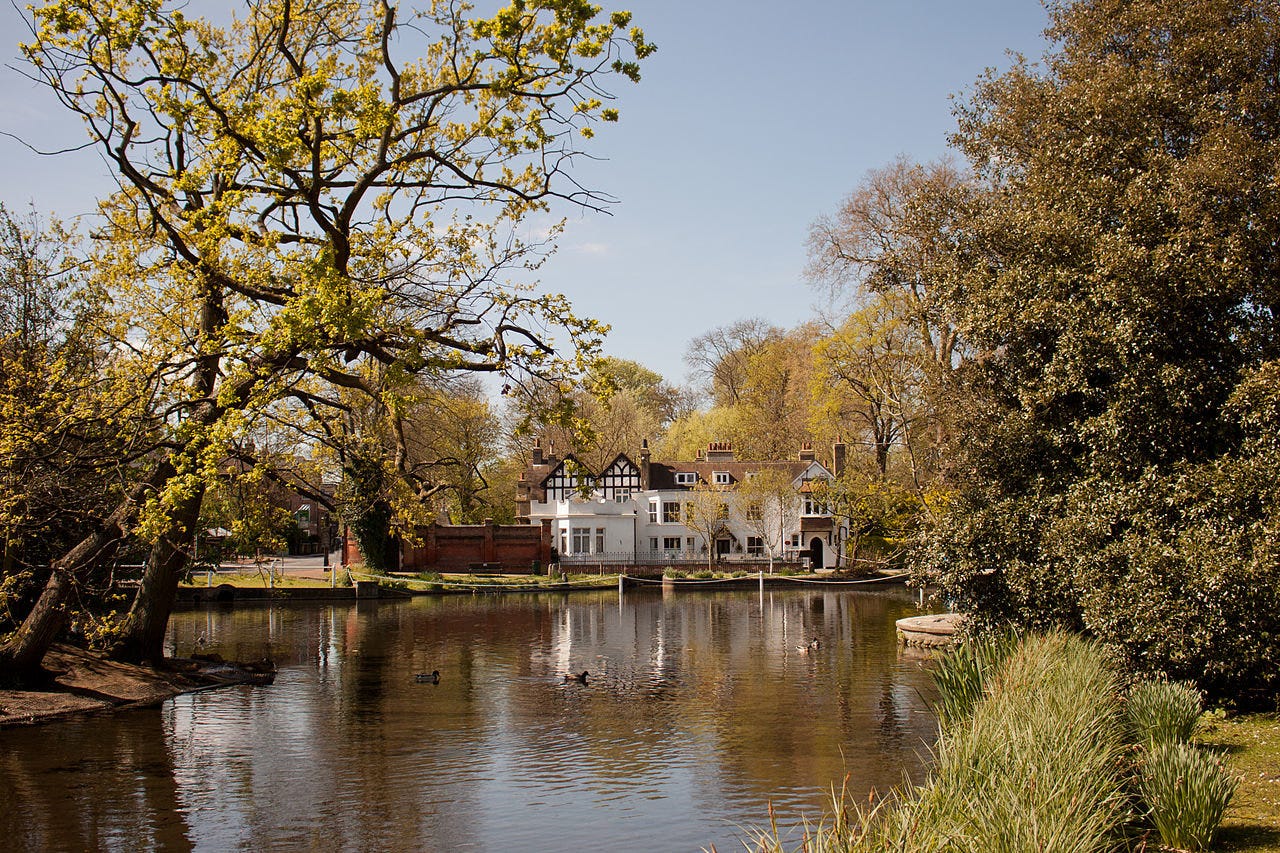
Each of these 4 Saxon villages was settled in the sandy areas that drain into the River Wandle. Look at the topography of Carshalton; it is a shallow valley that rises in the north (St. Helier) and south (Carshalton Beeches). The central part of the valley is the modern area we now know as Carshalton Village, which is known for its ponds and streams.


Other Saxon Plants
Here are some other plants that the Saxons introduced or cultivated for domestic use in Britain. We could consider many of these to be native plants in the modern era.
Woad (Isatis tinctoria)
While we often associate blue dye with the ancient Celts/Picts, the Saxons were the ones who turned Woad into a major migratory crop. They used it not just for body art, but also for the textile industry that the Saxons started in Surrey and other parts of South East England.
Woad requires nitrogen-rich soil, often found in the fertile patches of the North Downs.
Today, it is often grown as an ornamental for its clouds of yellow flowers. If you find it growing wild near old sheep-farming routes in Surrey, it’s a ghost of the Saxon textile trade.
Medlar (Mespilus germanica)
Some historians argue that the Romans brought it to Britain, and its popularity exploded during the Saxon period. It produces a fruit that must be blet (rot slightly) before it is edible.
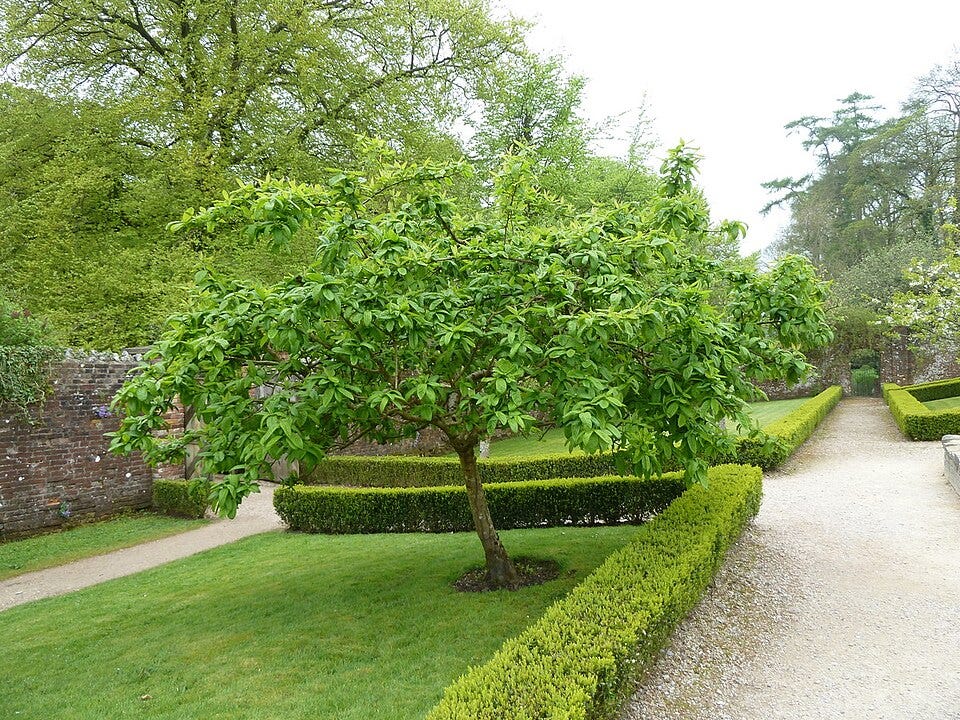

Medlars were incredibly popular in the monastic gardens that began to dot Surrey during the Saxon era. A known example was at Chertsey Abbey, founded in 666 AD and long since ruined. Details are scarce because in 1381, the British peasants revolted, and church records were destroyed by the revolting citizens of Egham. Notes from the diary of John de Rutherwyk (1307-1346) survived, and he described a massive garden alongside the Abbey.
The medlar tree is a plant that has a strong association with ancient Europe. As Saxons moved into their British colonies, they brought the Medlar as a high-status fruit tree that could survive damp Surrey winters.
Fennel (Foeniculum vulgare)
Fennel was one of the “Nine Sacred Herbs” mentioned in the 10th-century Lacnunga (a collection of Anglo-Saxon herbal texts). While the Romans introduced it, the Saxons naturalised it into their spiritual and culinary lives.

Fennel is very well-suited to the fast-draining, chalky soils of the Surrey Hills (AKA “The North Downs”). Fennel is found in many modern Surrey gardens, and can be found growing wild in many wooded areas of the County.
The Saxons believed fennel could ward off evil spirits. Its prevalence in modern Surrey herb gardens isn’t just culinary; it’s a remnant of a Saxon apotropaic landscape.
The Damson (Prunus domestica subsp. insititia)
Damask and Damson Plum are commonly found plum trees in modern Surrey. The Damask Plum is often thought to have arrived with the Normans or Crusaders. Damson is said to be a much older immigrant to the UK. Many archaeobotanists believe bullace and damson varieties were brought over by Germanic tribes earlier.
In 2026, you still see these in the ancient hedgerows of the Surrey/Sussex border.
The Saxons were masters of the hedgerow. They didn’t just plant for boundaries; they planted for forage. The wild-looking plum trees in Surrey’s shaws (narrow strips of woodland) are likely the feral survivors of Saxon migration.
Other Saxon Plants
Here are some more examples of plants in the Leac-tun Plant Palette:
Mugwort (Artemisia vulgaris), Saxon name: “Mucgwyrt”; often found in a wildlife garden design.
Betony (Betonica officinalis), Saxon name: “Bishopwort”; popular in cottage garden borders.
Broad Bean (Vicia faba), Saxon name: “Bean” 😊; staple of Surrey vegetable allotments.
Apple (Malus ssp.), Saxon name: “Appel”; the ancestor of the Surrey cider orchards.

Surrey for Saxon Gardeners
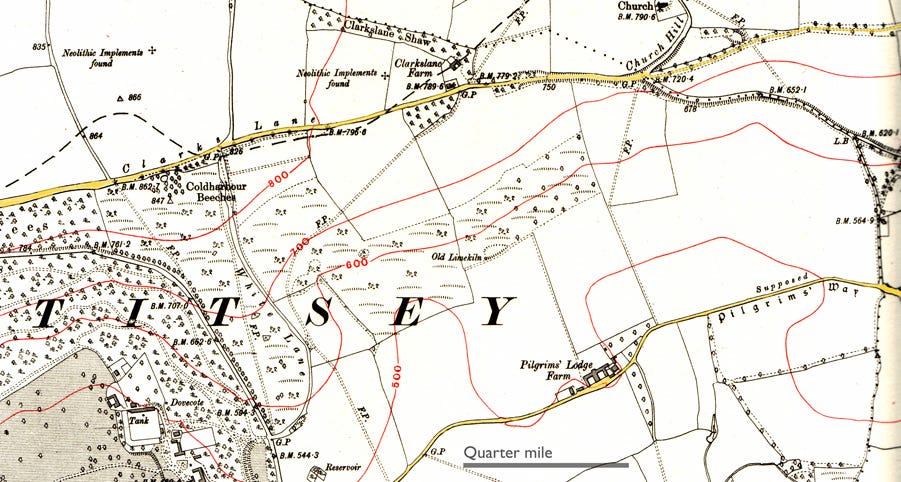
Surrey’s geography made it a unique landing pad for these plants. The Saxon migrations started from the coasts of South East England, and many Saxon settlers made their home in Surrey. The North Downs provided a highway for people (the famous Pilgrims’ Way follows an even older track), and the Surrey Weald provided the deep soil needed for the heavy crops the Saxons preferred, like cabbage and beans.
I loved reading this!