

This blog post is part of a series on the native plants of modern Britain. Much of the native flora in the UK has been introduced over many hundreds of years during the great migrations in British history. Archeobotany has unearthed evidence to prove that this migration of people affected the migration of plants.
Archeobotany

Archeobotanists and historians have researched the plant migrations back to the Romans' conquest of Britain in AD 43, almost 2,000 years ago. As a garden designer based in Surrey, I am most interested in how these migration events affected this leafy county on the edge of London.
Power and Preservation
This is the third chapter in the series. Let’s try to summarise each chapter in this series so far with one word:
The Roman era was Order.
UK Native Plants: The Roman Legacy

The Roman colonisers of Britain sought to bring order to a land that was fragmented by many tribes. Roman villas began to dot the landscpae of what we now call the Home Counties.


The Saxon era was Utility.
Anglo-Saxon Native Plant Gardens

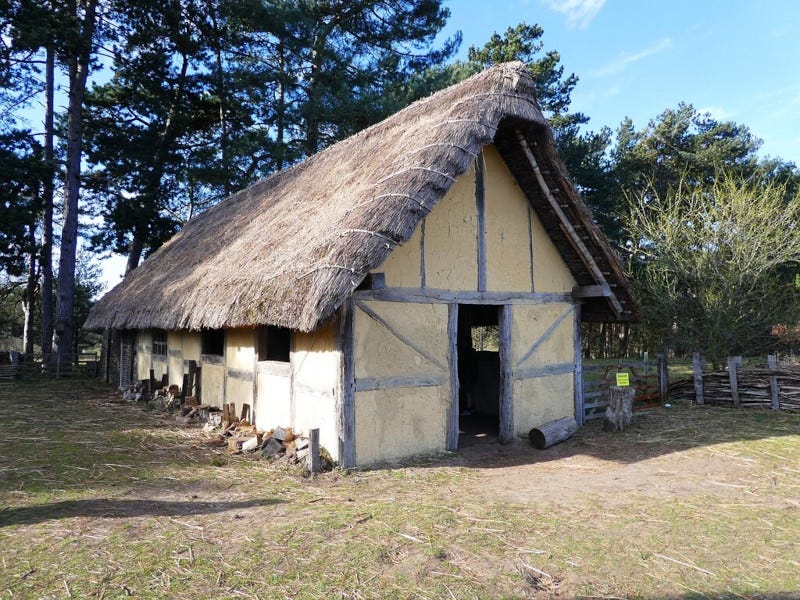
Saxons regarded Surrey as fertile land for growing their leeks and onions. The origins of Carshalton, Sutton and Beddington can be traced back to the Saxon settlements called Tuns (Ton), and most importantly, the Leac Tun.
Power and Preservation
Based on my research, I can say that the Norman period is hard to sum up in one word. If I am allowed one more word, I would use two words to summarise the Norman impact on Surrey’s Landscapes: Power and Preservation.
While the Saxons were busy clearing the land for their tuns, the Normans saw the Surrey landscape through a different lens. To them, the rugged terrain of the North Downs and the sandy ridges of the Surrey Hills were originally treated as the boondocks of London and considered to be a wasteland.
After the Battle of Hastings, the Normans marched to London and left their mark on Kent and Sussex. The Surrey Hills were not of interest to them as a place to conquer and were largely ignored. That is, until they became protected by the aristocracy, and the Surrey Hills became a royal private members’ club.
* Photo (Left) is an aerial view of Ockley, where the main road runs very orderly in a straight line; this is a remnant of the ancient Stane Street (Roman Road). Photo by Lewis Clarke | Geograph. The other photo (Right) is a waymarker monument to Stane Street, and can be found on Bignor Hill. Photo by Janine Forbes | Geograph.

A Valuable Landscape for Sport
While Kent was the gateway to conquest and London the prize for the Norman invaders, Surrey remained a wild, densely wooded frontier. This started the untamed era of the Surrey Landscape. Some say it is still quite wild in the modern era, with many outdoorsmen using it as their playground. I have to confess to shredding the gnar a few times in these hills myself.

The Saxons saw Surrey as a place to settle and grow crops. Surrey was a landscape the Normans didn’t really want to farm; instead, they wanted to own it. The Norman rulers saw Surrey as more like a resort. They valued the woody nature of Surrey and wanted to preserve it for their own enjoyment.
Windsor Forest
The Normans introduced Forest Law. This didn’t mean a forest in the modern sense of a land covered in trees. The Normans used the word “Forest” as a legal definition of a territory for hunting. As part of Forest Law, vast swathes of Surrey came under legal protection to control land use.
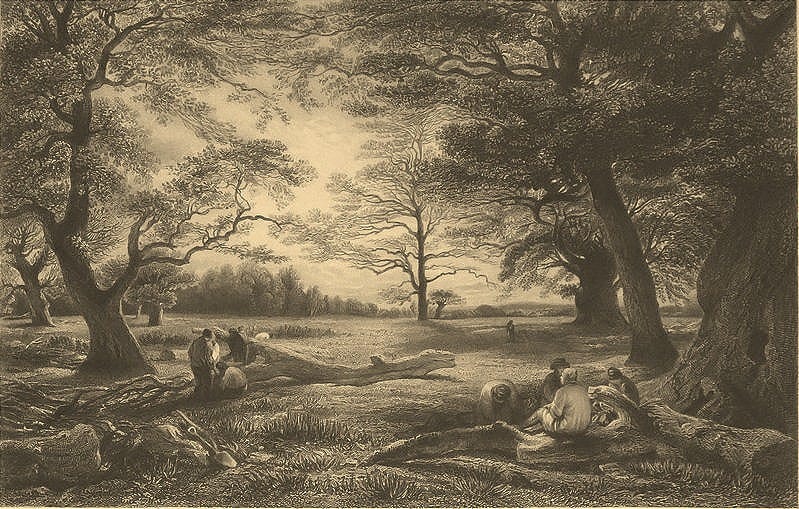
Windsor Forest was created before the Norman invasion of 1066 AD. The leader of the Norman invasion became King William of England (AKA William the Conqueror). William saw great value in Windsor Forest as a royal hunting ground and expanded its range to cover almost all of modern Surrey.
During the Middle Ages, Surrey extended into what is now SouthWest London, and most of the population moved to the areas we now know as Mitcham, Wimbledon, Merton or Croydon. This was mostly because the Normans protected the Surrey Hills, and it is part of the reason why so many continue to enjoy recreating in Surrey in 2026.
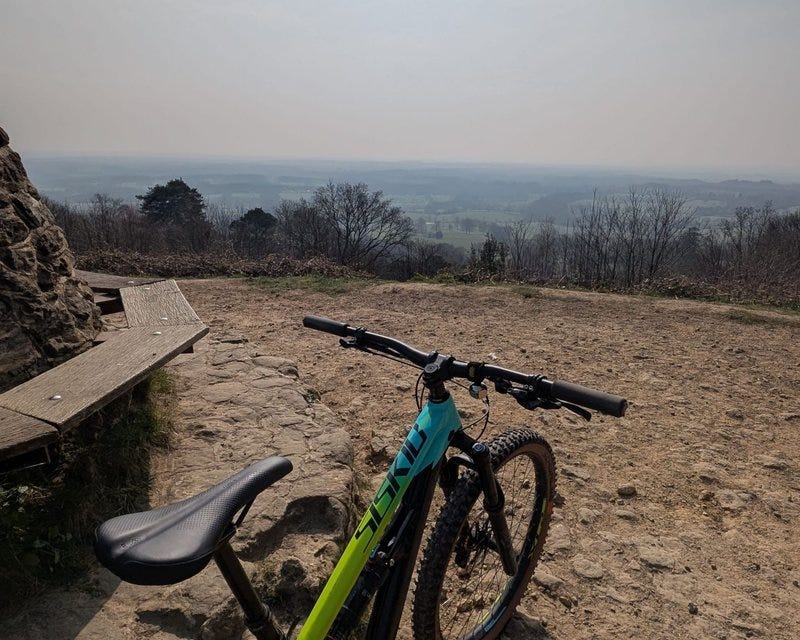
I often go mountain biking and trail running in the Surrey Hills, where it really feels like an ancient forest. This “Ancient Woodland” aesthetic is a source of inspiration for many of my designs, and I know many others appreciate it as well. The land we now enjoy as the Surrey Hill AOSB (Area of Outstanding Beauty) is a direct result of Norman hunting preserves protecting these lands from being cleared for Saxon-style farming.
Tree Protection

The Normans prioritised English Oak (Quercus robur) for ship-building and Beech (Fagus sylvatica) for timber and fuel for fire. In the Windsor Forest, these trees were protected, and it was very difficult to get approval for felling.

Fagus sylvatica is commonly known as European Beech, and is a migrant from the Continent. The Normans introduced this to the Southeast of England as a resource; now the species has naturalised itself across the British Isles. Beech trees are highly coveted as ornamental trees in the modern era, and we can also trace this use back to the Normans.
Norman Garden Design in Surrey
While the Normans mostly treated Surrey as a preserve, the parts of Surrey closer to London were growing population centres. The edges of the Windsor Forest began to be settled by Normans, who brought their forms of garden design to Britain.
Cultured Landscape - The Introduction of the Orchard
The Normans were obsessed with pomiculture (fruit growing). Norman settlers brought many new fruit trees with them to the UK.
Normans enjoyed Pippin (Apple) and Pears. While wild versions existed before in Surrey, the Normans grafted their own named varieties from France onto these wild trees.

The sheltered valleys of the Surrey Hills provide the microclimates needed for these fruit trees to survive.
The word Orchard is derived from the Normans. The Saxons used the word geard to label their gardens. Geard is the origin of the modern English “Yard”. To the Normans, a garden wasn’t just a geard; it was an ortgeard. Ortgeard is the old English word for “Orchard”. The “Ort” is derived from the Latin “Hortus”, which was the Roman name for their villa gardens.
The Monastic Pipeline
The Normans were prolific builders of abbeys and priories (e.g. Waverley Abbey in Surrey, the first Cistercian monastery in England).
With the monks came the need for sacramental wine. They brought sophisticated viticulture to the south-facing slopes of the North Downs. Winemaking still features in modern Surrey with wineries like Denbies Wine Estate near Dorking.


The Normans were the first to look at a Surrey hillside and plan a vineyard. While wine had been popular in Britain since the Roman invasion, it was mostly exported from Southern Europe before the Normans. Vitis vinifera (Grapevine) was brought from Normandy, where the Normans had successfully cultivated grapes to grow in a much cooler, maritime climate than their ancestral home in the Mediterranean.
The Elite Herbs
The Normans brought a more refined palate with them. They moved away from the Saxon pottage (basic stews) toward flavoured meats. The Normans cultivated Satureja (Winter Savoury) and Hyssopus (Hyssop) herbs in their gardens.

These were medicinal plants as well as culinary. These herbs were part of the standard plant palette seen in Physic Gardens at the Norman manor houses and monasteries.
The Spiritual Anchor: St. James’, Shere
While the forests remained wild, the village centres of Surrey became the site of a new, highly symbolic landscape. This landscape was anchored by the stone church and courtyard.
In the village of Shere, nestled in a picturesque valley of the Surrey Hill there is a church called St. James. Within the courtyard of St. James lies a story that may shock you. In 1329, a woman named Christine, the young daughter of a local carpenter, chose to become an Anchoress at the Church of St. James.
Being an anchor to the church meant literally being walled into a small cell attached to the church for life. This meant that you would live out your days anchored to the church, and this great sacrifice would be rewarded in heaven.
Christine was entombed in her stone cell with a window out to the courtyard and a small opening so she could see the church altar. The window to the courtyard allowed Christine to see all god’s creatures, great and small. It was also the only way to pass her food so she could survive in her cell.
Christine was in her cell for 3 years and then decided she could no longer bear her self-imposed death sentence. She managed to break out of her cell and broke her vow to the church. She enjoyed her freedom until one day in 1332, she told the bishop that she was ashamed of her weakness and begged to be re-enclosed in her cell. She wasn’t just ashamed, she was frightened. In the Norman era, when an anchor broke their vow it meant they faced a fate worse than death. She would be excommunicated from Christianity and damned to Hell. And so, the Dean of Guildford agreed that she would be forgiven for her sins as long as she re-entered her cell within 4 months, where she would remain until death set her free.
The Quatrefoil
The church of St. James stands to this day in Shere. Today, there are remains of her cell in a faint outline seen in the exterior brickwork. There is also a small opening surrounded by a quatrefoil. Christine received the sacrament of Holy Communion through this hole.
The quatrefoil is a four-lobed leaf shape, and is a botanical motif that the Normans used to bring the garden into their buildings. It was an architectural motif.
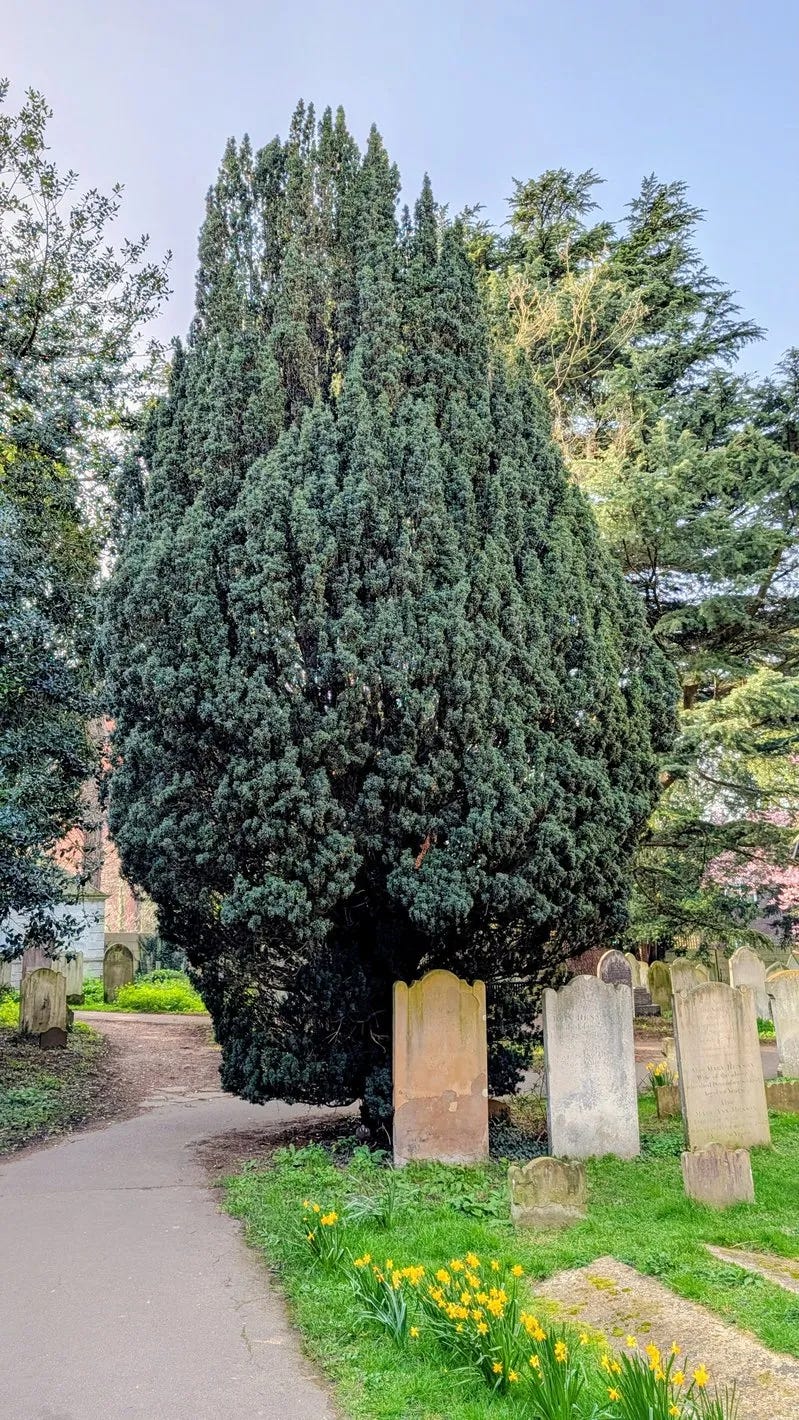
In the churchyards, the landscaping was deliberate and continued Saxon design themes. The Normans planted Yew (Taxus baccata), a tree that predates the Normans but became a consistent fixture of their churchyards. Its evergreen nature symbolised eternal life, while its toxic needles kept wandering livestock (which belonged in the Saxon fields) away from the hallowed ground.
A Layered Legacy
The Norman migration didn’t carpet Surrey with new wildflowers or shrubs like the Romans. Neither did they consider Surrey to be a place for agriculture like the Saxons. Instead, they gave the landscape of Surrey an elevated status. They gave us the Royal Forest, protected the ancient timber, and introduced a more refined sense of place.